 Compte



Vous avez probablement entendu dire que l'huile de coco était miraculeuse une semaine et nuisible pour le visage la suivante. Les deux camps ont partiellement raison, et aucune réponse n'a été écrite pour une peau de plus de 45 ans. La vérité honnête dépend du type d'huile de coco et de la partie du corps où vous l'appliquez.
Ce guide vous montre où l'huile de coco fonctionne, où elle échoue, et ce dont votre visage a réellement besoin.
Points clés à retenir
- L'huile de coco est un hydratant éprouvé pour la peau sèche du corps, mais son efficacité sur le visage dépend de votre type de peau.
- La peau mature et sèche la tolère généralement bien, tandis que la peau grasse ou sujette à l'acné peut présenter des imperfections avec la même huile.
- L'acide laurique lui confère une réelle action antibactérienne contre les bactéries responsables de l'acné inflammatoire.
- Dans un essai clinique, l'huile de coco vierge a réduit la sévérité de l'eczéma d'environ 68 %, elle aide donc sur les zones sèches et irritées.
- Elle scelle l'humidité mais ne peut pas reconstruire le collagène que votre visage perd après la ménopause.
Qu'est-ce que l'huile de coco et qu'y a-t-il dedans ?
L'huile de coco est une graisse végétale pressée à partir de la chair de la noix de coco, solide à température ambiante et qui fond dès qu'elle touche la peau chaude. Vous l'utilisez comme hydratant pour le corps, baume pour les mains et baumes à lèvres. Elle est aussi employée comme masque capillaire, et l'huile de coco pour les cheveux peut lisser les pointes sèches, bien que ce texte se concentre sur le soin de la peau.
Ce qui rend l'huile de coco intéressante, c'est la graisse elle-même. Elle est environ 90 % de gras saturé, c'est pourquoi elle reste à la surface de la peau et la scelle plutôt que de pénétrer rapidement. Ses graisses à chaîne moyenne incluent l'acide laurique, myristique, palmitique, caprylique et caprique, et elle est pauvre en acide linoléique, la graisse plus légère que la peau sujette aux imperfections préfère.
La plupart des bienfaits pour la santé que les gens répètent au sujet de l'huile de coco proviennent de ces graisses et des antioxydants du fruit frais. C'est ce mélange qui lui confère à la fois sa réputation apaisante et son risque d'obstruction des pores.
Vierge vs Raffinée vs Fractionnée : La Question du Type que la Plupart des Gens Comprennent Mal
Trois sortes d'huile de coco se trouvent sur les rayons, et ce sont réellement des produits différents.
Huile de coco vierge
L'huile de coco vierge est une huile de coco pressée à froid, fabriquée à partir de chair de coco fraîche, souvent provenant de noix de coco biologiques pressées en petits lots et mises en bouteille dans des pots en verre. En tant qu'huile de coco non raffinée, parfois étiquetée « extra vierge », elle conserve le profil complet des acides gras plus la vitamine E du fruit. L'huile de coco non raffinée a une teneur en phytonutriments plus élevée que l'huile raffinée, c'est pourquoi la plupart des recherches dermatologiques utilisent cette version.
L'huile de coco peut être fabriquée par voie sèche ou humide, en pressant la chair séchée ou fraîche des noix de coco brutes. De toute façon, la version vierge est celle que votre peau préfère, avec une réserve : un indice comédogène de 4 sur 5.
Huile de coco raffinée
L'huile de coco raffinée, l'huile de coco ordinaire vendue pour la cuisine, provient de coprah séché et perd la plupart de ces antioxydants. Elle résiste aux températures élevées et a un point de fumée plus élevé, ce qui convient à une poêle mais n'ajoute rien pour votre peau. En tant qu'huile de cuisine économique, c'est acceptable, mais pour les soins de la peau, il n'y a aucune raison de la choisir plutôt que la vierge.
Huile de coco fractionnée
L'huile de coco fractionnée est dépourvue des graisses à longue chaîne, y compris l'acide laurique, elle reste donc liquide et claire. Son indice comédogène est beaucoup plus bas parce que les chaînes plus lourdes qui obstruent les pores sont éliminées. Cela la rend plus sûre comme transporteur pour une utilisation faciale sur peau grasse, bien qu'elle perde la puissance nutritive de l'huile entière.
Guide d'achat rapide :
- Vierge : corps, peau mature sèche, zones sujettes à l'eczéma. À éviter si votre visage présente des imperfections.
- Fractionnée : visage, peau grasse, mélanges légers. À éviter si vous voulez la puissance nutritive de l'huile complète.
- Raffinée : cuisine uniquement. À éviter pour les soins de la peau.
Ce que l'Huile de Coco Fait pour la Peau Mature
Vers 45 ans, votre peau cesse de retenir l'eau comme elle le faisait. Le déclin des œstrogènes affine la peau, réduit le sébum et crée des lacunes dans la barrière lipidique, donc ajouter de l'humidité de l'extérieur est plus important. Pressée sur la peau humide, l'huile de coco forme une couche protectrice qui maintient la peau hydratée et la laisse plus douce.
Appliquer l'huile de coco sur la peau humide emprisonne une fine couche d'eau contre la barrière au lieu de recouvrir la peau sèche de graisse. Cette étape simple et ultra-hydratante est le geste le plus efficace que l'huile de coco puisse faire dans une routine de soin du corps.
L'huile de coco aide-t-elle l'eczéma et la peau sèche et irritée ?
Oui. L'huile de coco est l'une des meilleures options naturelles pour l'eczéma et la peau sèche et irritée. Dans un essai clinique, l'huile de coco vierge a réduit la sévérité de l'eczéma d'environ 68 % sur huit semaines, surpassant clairement l'huile minérale selon une échelle de gravité standard.
Ses propriétés anti-inflammatoires aident à calmer les rougeurs et les irritations qui accompagnent ces affections cutanées. Appliquez une fine couche deux à trois fois par jour, car mince et fréquent dépasse épais et rare.
Pour les zones rebelles, un baume apaisant pour peau sèche à base de plantes offre le même apaisement sur le visage sans le risque d'obstruction des pores que l'huile de coco vierge présente.
L'huile de coco est-elle bonne pour l'acné ?
L'huile de coco est une réponse mitigée pour l'acné. L'acide laurique qu'elle contient cible les bactéries nuisibles responsables des imperfections, inhibant la croissance de Propionibacterium acnes, la souche qui provoque l'acné inflammatoire, avec une action antibactérienne plus puissante que le peroxyde de benzoyle selon la recherche du Journal of Investigative Dermatology.
Le problème est que l'huile de coco vierge entière obstrue également les pores sur peau grasse. Sur un visage sujet aux imperfections, elle peut alimenter les mêmes imperfections que vous essayez d'éliminer, donc l'actif anti-acné se trouve dans une huile qui peut bloquer vos pores. La peau mature et sèche la tolère bien mieux, mais pour l'acné active, l'huile travaille contre elle-même.
Si l'acné ou la rosacée est le vrai problème, les baumes qui éliminent la peau sujette à l'acné sont conçus pour cela sans ce compromis.
L'huile de coco cicatrise-t-elle les blessures ?
L'huile de coco présente de réelles propriétés cicatrisantes dans la recherche sur les blessures, bien que principalement chez l'animal jusqu'à présent. Dans une étude publiée dans Skin Pharmacology and Physiology, l'huile de coco vierge a aidé à accélérer la cicatrisation des plaies, augmentant le pontage du collagène et les marqueurs de réparation cutanée pendant la cicatrisation.
Une étude animale distincte de 2013 a montré que l'huile de coco améliorait l'état antioxydant plus que l'huile d'olive ou l'huile de tournesol. Ces effets proviennent de son action anti-inflammatoire, qui peut réduire l'inflammation et peut même soulager un peu de l'inconfort qui l'accompagne.
L'huile de coco peut donc aider avec la peau irritée et réactive, et ces bénéfices potentiels sont réels. Ils ne s'étendent simplement pas au raffermissement ou à l'anti-âge sur un visage mature.
L'Échelle Comédogène, Honnêtement
Vous avez vu l'huile de coco classée 4 sur 5 pour l'obstruction des pores, sur une échelle de 0 à 5. Ce chiffre provient d'essais sur les oreilles de lapins à pleine concentration, pas de produits finis sur des visages réels. La concentration, la formulation et d'autres facteurs décident ce qui se passe réellement sur votre peau.
Une note de 4 sur 5 n'est pas un signal d'alarme universel. La peau mature et sèche sans acné tolère souvent l'huile de coco vierge qui enverrait directement une peau grasse de 20 ans en imperfections. Sur le visage, les huiles plus légères et les beurres comme l'huile de jojoba ou le beurre de karité sont plus doux que l'huile de coco vierge lourde, tandis que sur votre corps, la note compte à peine et vous pouvez utiliser la vierge librement.
L'Acide Laurique, le Collagène, et Ce que l'Huile de Coco Ne Peut Pas Faire
Près de la moitié de l'huile de coco vierge est de l'acide laurique, une graisse liée au soutien de la barrière et à la réparation des cellules cutanées. Mais l'huile de coco n'est pas un rétinoïde, et elle ne reconstruit pas le collagène comme le font les actifs plus profonds. Le collagène diminue d'environ 30 % dans les cinq ans suivant la ménopause, et une huile d'étanchéité ne peut pas remplacer ce que le temps enlève.
L'huile de coco ne fait rien non plus contre les taches sombres ou le teint irrégulier. Elle scelle l'humidité ; elle ne restaure pas. Pour les rides fines, la terne et le teint, les baumes pour peau mature sont formulés pour faire ce qu'une huile ne peut pas.
Comment Utiliser l'Huile de Coco Après 45 Ans : Un Guide Pratique
Appliquer l'huile de coco correctement dépend surtout de où, pas de combien. Ces quatre routines valent votre temps.
- La routine corps sur peau humide. Chauffez une cuillère à soupe d'huile de coco vierge entre vos paumes et pressez-la sur la peau humide après une douche, en insistant sur les tibias, les coudes et les avant-bras.
- Le mélange gommage. Ajoutez une petite quantité à une paume sèche, mélangez avec de l'eau chaude et massez les zones rugueuses, puis rincez.
- Lèvres et mains. Appliquez un peu sur les lèvres sèches ou les mains gercées comme un baume naturel rapide.
- Ce à éviter. N'utilisez pas l'huile de coco vierge lourde comme hydratant visage le jour, et gardez-la éloignée de la dermatite séborrhéique ou de la peau sujette aux pellicules, car son acide laurique alimente la levure responsable de ces poussées.
Commencez par la routine corps sur peau humide cette semaine. Rendement le plus élevé, risque le plus bas, lecture la plus rapide sur le fait que votre peau aime l'huile de coco ou non.
Le Vrai Verdict sur l'Huile de Coco pour la Peau Après 45 Ans

Donc, l'huile de coco est-elle bonne pour la peau après 45 ans ? Sur votre corps, oui. Sur votre visage, cela dépend : la peau mature et sèche peut l'apprécier, tandis que la peau grasse ou sujette aux imperfections ferait mieux de la sauter.
Les vrais bénéfices de l'huile de coco sont l'hydratation, le scellage de la barrière, l'apaisement et l'action antibactérienne, pas la réparation du collagène ou la correction du teint. Elle trouve sa place dans votre soin du corps bien plus que dans votre routine visage. L'huile de coco scelle ; elle ne restaure pas.
Votre peau après 45 ans a besoin de plus qu'une seule huile ne peut donner. Frøya Organics construit une routine complète et sans eau à partir de plantes arctiques sauvages et de cire d'abeille biologique, conçue pour soutenir le visage mature que l'huile de coco ne peut pas. La routine construite pour la peau mature associe le soutien de la barrière à des actifs botaniques, sans deviner sur les superpositions.
Les femmes qui font le changement ont tendance à voir la différence, et les photos avant et après des clients racontent mieux cette histoire que n'importe quelle affirmation ne peut le faire.
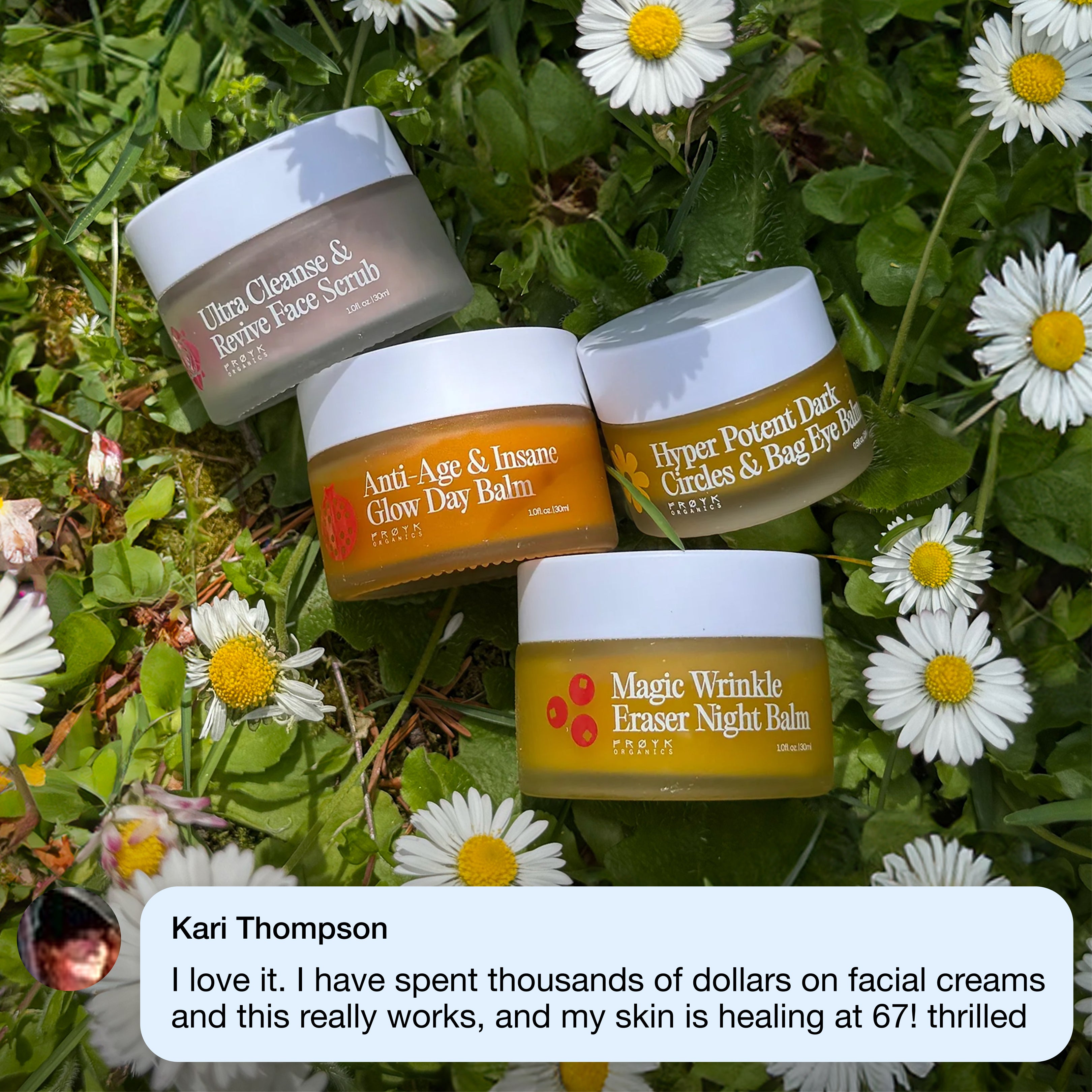
Plantes arctiques sauvages et cire d'abeille biologique. Zéro eau, zéro parfum synthétique. Quatre baumes dans une routine qui nourrit les lipides de la barrière dont dépend une peau resplendissante, soutenue par une garantie de remboursement 60 jours.
Acheter le Système - $11Frequently Asked Questions
Puis-je utiliser l'huile de coco sur mon visage si j'ai plus de 45 ans ?+
Quelle est la différence entre l'huile de coco vierge et fractionnée ?+
L'huile de coco aide-t-elle vraiment contre les rides ?+
Puis-je utiliser l'huile de coco si j'ai des pellicules ou une dermatite séborrhéique ?+
Comment l'huile de coco se compare-t-elle à l'argan ou au jojoba pour la peau mature ?+