 Account


Wenn Ihre Haut Mitte 40 zu erröten, zu brennen oder kleine Beulen auszubilden begann und nichts, dem Sie vertraut haben, funktioniert mehr, bilden Sie sich das nicht ein. Die Feuchtigkeitscreme, die sich wie eine Freundin anfühlte, brennt plötzlich. Das Serum, das Sie ein Jahrzehnt lang verwendet haben, lässt Ihre Wangen am Mittag fleckig aussehen.
Die meisten Rosazea-Artikel geben Ihnen eine recycelte Liste mit Küchen-Zutaten. Roher Honig. Grüner Tee-Kompressen. Eine vage Warnung vor würzigem Essen. Keine erklärt, warum Ihre Haut gerade jetzt, in diesem Jahrzehnt, nach 45 ruhigen Jahren reaktiv wurde.
Dieser Artikel macht etwas anderes. Ich führe Sie in einfachem Englisch durch die Entzündungskaskade, zeige Ihnen die hormonelle Verbindung, über die fast niemand schreibt, und ordne natürliche Rosazea-Behandlungs-Optionen nach tatsächlicher Evidenz. Sie werden sehen, welche Wirkstoffe Daten aus klinischen Studien haben, welche starke Mechanismen aber keine Rosazea-spezifischen RCTs haben, und welche Tradition einen Laborkittel trägt. Sie erhalten eine echte Routine, keine Liste.
Beginnen Sie mit dem Teil der Geschichte, den fast niemand erzählt.
Warum Rosazea sich in Perimenopause und Menopause verschlimmert
Estrogen hat Ihre Haut Jahrzehnte lang vor Entzündungen geschützt, und die meisten Frauen wissen das nicht, bis es weg ist.
Estradiol verrichtet stille tägliche Arbeit in Ihrer Haut. Es reguliert die Antioxidans-Enzym-Aktivität. Es unterdrückt NF-kB, den Master-Schalter, der fast jedes entzündliche Gen im Körper aktiviert. Es hält oxidativen Stress in Schach. Wenn Estrogen in der Perimenopause sinkt, lockern sich diese Bremsen auf einmal, und Haut, die nie errötet ist, beginnt leicht zu erröten.
Die Forschung ist nicht subtil. Eine Studie des West China Hospital mit 59 Frauen (Durchschnittsalter 48,42) fand heraus, dass Estradiol negativ mit der Schwere von erythematotelangiektasischer Rosazea korreliert (r=−0,021, p=0,005). Frauen mit milder ETR hatten einen mittleren Estradiol-Wert von 95,82 pg/mL. Frauen mit schwerer ETR hatten weniger als die Hälfte, 42,28 pg/mL. Diese Lücke ist nicht zufällig.
Ein gemeinsamer vaskulärer Weg erklärt das Muster. Sowohl menopausal bedingte Hitzewallungen als auch Rosazea-Erröten beruhen auf Prostaglandin-gesteuerte Vasodilatation. Jedes Erröten trainiert die Gesichtsblutgefäße, beim nächsten Mal leichter zu erröten. Im Laufe von Monaten wird dies zu einer progressiven Sensibilisierungsschleife.
Die emotionale Belastung ist dokumentiert. In derselben Studie hatten 45,8 % der Frauen Angststörungen und 40 % erfüllten Kriterien für Depressionen. Was Sie fühlen, ist häufig und biologisch, nicht ein persönliches Versagen.
Hormonale Realität macht Sie nicht machtlos. Es bedeutet, dass Ihr Behandlungsplan sich von einem unterscheiden muss, den Sie mit 30 aufgebaut hätten. Um dies zu behandeln, müssen Sie verstehen, was unter der Oberfläche passiert, wenn Ihre Wangen erröten.
Was tatsächlich unter Ihrer Haut passiert, wenn Sie erröten
Ihr Rosazea-Erröten ist nicht zufällig. Eine spezifische Kette von Ereignissen findet in Ihrer Haut in den 30 Sekunden vor der Rötung Ihrer Wangen ab, und fast kein Artikel führt Sie durch sie hindurch.
Es beginnt mit der Barriere. Rosazea-anfällige Haut hat ein durchlässigeres, dünneres Stratum corneum. Das ist sowohl Ursache als auch Folge. Eine schwächere Barriere lässt Reizstoffe eindringen und Wasser aus, was die Kaskade vorbereitet.
Dann kommt die Milbe. Jeder hat Demodex-Milben im Gesicht. Rosazea-Haut hat mehr davon, und das Chitin in ihren Exoskeletten aktiviert TLR2 auf Ihren Hautzellen. Diese Aktivierung lässt KLK5 (Kallikrein-5) überaktiv werden, was Kathelicidin in abnormal hohe Mengen eines Fragments namens LL-37 spaltet.
Bei normalen Werten ist LL-37 antimikrobiell und hilfreich. Bei erhöhten Werten wird es pro-entzündlich und aktiviert TRPV1, denselben Nervkanal, der auf Wärme, Schärfe und Capsaicin reagiert. Das ist Ihr neurogenisches Erröten, Ihr Gesicht wird in weniger als einer Minute heiß.
Ein zweiter Pfad verläuft parallel. Das NLRP3-Inflammasom aktiviert sich und setzt IL-1beta und IL-18 frei. Diese Zytokine treiben die Papeln und Pusteln der papulopustulösen Rosazea an. Erröten und Beulen sind zwei Türen im selben Haus.
Der Subtyp ist hier wichtig. ETR (erythematotelangiektasisch) ist überwiegend vaskulär: anhaltende Rötung, sichtbare Blutgefäße, Erröten. PPR (papulopustulös) sind entzündliche Läsionen, die wie Akne aussehen können. Wie Dr. John Barbieri von Harvard sagt, "Der größte Fehler ist, beide Subtypen identisch zu behandeln." Die meisten Frauen haben Merkmale von beiden, mit einem dominierend.
Die Kaskade ändert, wie Sie jeden Wirkstoff bewerten. Anti-entzündliche Mittel, die NF-kB vorgelagert treffen (Sanddorn, grüner Tee EGCG), beruhigen das System, bevor es spiralförmig wird. Barriere-Reparatur-Wirkstoffe (Ceramide, Jojoba, kolloidales Hafermehl) schließen die Tür, durch die die Kaskade geht. Beruhigende vasoaktive Wirkstoffe (Chrysantheme, Mutterkraut) beruhigen das nachgelagerte Erröten.
Die Wirkstoffe, die Ihre Rosazea gerade verschlimmern
In einer National Rosacea Society-Umfrage von 1.066 Frauen mit Rosazea sagten 41%, dass ihre Hautpflege es aktiv verschlimmert. Die Schuldigen verstecken sich in Produkten, die speziell für empfindliche Haut vermarktet werden.
Alkohol denat führte die Liste mit 66% an. Hamamelis und Duftstoff lagen mit je 30% gleich. Menthol kam auf 21%. Alkohol denat ist der Heimtückischste der vier, weil er in Tonings, Sprays zum Fixieren, "leichten" Feuchtigkeitsseren und beruhigenden Seren lebt. Lesen Sie die Etiketten. Wenn Alkohol denat in den ersten fünf Inhaltsstoffen von etwas Alltäglichem auf Ihrem Gesicht erscheint, funktioniert es gegen Sie.
Duftstoff ist die nächste Falle, und natürlicher Duftstoff zählt. Ätherische Öle sind nicht automatisch sicher, weil sie botanisch sind. Pfefferminz-, Eukalyptus-, Nelken-, Zimt- und Zitrusöle aktivieren alle direkt TRPV1, denselben Nervkanal aus dem letzten Abschnitt. Deshalb kann ein "beruhigendes" Pfefferminz-Toning Ihre Wangen zwei Stunden lang leuchtend rot machen.
Physikalische Peelings und Scrubs gehören in denselben Behälter. Dr. Sam Bunting ist direkt: "Skippieren Sie Facials, physikalische Scrubs, heiße Duschen." Alles, das eine zerbrechliche Barriere mechanisch stört, beschleunigt die entzündliche Kaskade.
Glykolsäure und Salicylsäure in Standard-Anti-Aging-Stärken sind zu viel für die meisten aktiven Rosazea. Ein 10%-iges Glykolsäure-Serum auf einer kompromittierten Barriere ist ein Aufflammen, das auf ein Wochenende wartet. Sehr schwache Formulierungen können manchmal toleriert werden, aber das ist ein sorgfältiges Gespräch mit einem Dermatologen, nicht ein Rätselraten bei Sephora.
Retinol sitzt in einer ehrlichen Grauzone. Schwache Retinaldehyd-Stärke in einer gut gepufferten Formel wird von einiger Rosazea-anfälliger Haut toleriert. Standard-Retinol in den meisten Anti-Aging-Linien ist nicht. Wenn Sie gerade aufflammen, unterbrechen Sie es und überprüfen Sie es in einem Monat neu.
Heißes Wasser und das Stapeln von Aktiven sind die stillen Beschleuniger. Eine heiße Dusche plus Vitamin C plus Retinol plus ein abblätterndes Toning ergibt thermische, chemische und mechanische Belastung auf einmal. Die Kaskade kümmert sich nicht, dass jedes Produkt "sanft auf sich selbst" ist.
Natürliche Rosazea-Wirkstoffe, die es wert sind, verwendet zu werden
Hier sind die natürlichen Wirkstoffe mit aussagekräftiger Evidenz oder Mechanismus für Rosazea. Die Liste beginnt mit dem, das Sie in Frøyas kalt gepressten Formeln finden werden, dann deckt es ab, was sonst noch wissenswert ist.
- Sanddorn - 26 Studien, die anti-entzündliche, antioxidative, barriere-reparative und vaskuläre Effekte bestätigen. Hemmt NF-kB, JAK2/STAT1 und MAPK. Der einzigartige Omega-7-Gehalt fördert die Barriere-Reparatur auf Lipidebene. Mehr dazu im nächsten Abschnitt.
- Jojobaöl - Wachsester-Struktur ahmt eng menschliches Talg nach und macht es einzigartig kompatibel mit Barriere-Reparatur. Ein wirksamer Öl-Reiniger-Base und beruhigender Träger für aktive Wirkstoffe.
- Hagebuttenöl - reich an Antioxidantien und Vitamin-A-Vorstufen. Unterstützt die Barrierenfunktion bei gleichzeitiger Bekämpfung von oxidativem Stress, der in postmenopausaler Haut höher läuft.
- Squalan - nicht-irritierender Barriere-Träger aus Zuckerrohr oder Olive. Kompatibel mit Rosazea-anfälliger Haut und eine ideale Base zum Verdünnen von Sanddorn auf die empfohlenen 2–5%.
- Ringelblume (Calendula) CO²-Extrakt - anti-entzündlich mit langer Geschichte der Verwendung bei empfindlicher und reaktiver Haut. CO²-Extraktion bewahrt die aktiven Flavonoide, die den Effekt antreiben.
- Arktisches Preiselbeersamenöl - reich an Omega-3, Omega-6 und Tocotrienolen. Antioxidantien-reich, unterstützt die Barriere und widersetzt sich oxidativem Stress, der für postmenopausale Rosazea relevant ist.
- Natürliches Vitamin E (Tocotrienole) - Antioxidans, das Sanddorns Carotenoid- und Flavonoid-Profil ergänzt. Unterstützt die Barrierenfunktion und reduziert oxidativen Schaden.
- Azelainsäure - die am meisten klinisch untersuchte natürlichen Ursprungs-Verbindung für Rosazea. Eine Meta-Analyse von drei RCTs (N=1.624) zeigte 51% Erythem-Verbesserung gegenüber 36% auf Placebo. Fünf RCTs (N=2.905) bestätigten starke Effekte für papulopustulöse Rosazea. Natürlich aus Getreide abgeleitet, über den Ladentisch bei 10% und Verschreibung bei 15–20% erhältlich.
- Mineralischer Sonnenschutz (Zinkoxid) - UV ist ein direkter Rosazea-Kaskaden-Auslöser. Dr. Abby Waldman, eine Harvard-Dermatologin, die selbst Rosazea hat, nennt täglichen Sonnenschutz das einzeln wichtigste Präventionsinstrument. Mineralisch statt chemisch, da chemische UV-Filter bei Rosazea-anfälliger Haut Erröten provozieren können.
- Niacinamid - 50-Patient-Studie zeigt nahezu vollständige Verbesserung von Rötung, Trockenheit und Reizung bei 4 Wochen. Stimuliert die Ceramid-Produktion und baut die Barriere wieder auf, während es Entzündungen beruhigt.
- Chrysanthemum indicum Extrakt - 246-Patient RCT über 12 Wochen mit statistisch signifikanter Erythem-Verbesserung (p<0,05). Nützlich für Erröten und anhaltende Rötung.
- PD-Mutterkraut - die gereinigte, Parthenolid-verarmte Form zeigte eine 60%-ige Reduktion in IL-1alpha nach UV-Bestrahlung gegenüber Placebo. Ein aussagekräftiger anti-entzündlicher Effekt auf eines der Zytokine, die PPR antreiben.
- Kolloidales Hafermehl - 5-Wochen-Studie zeigte eine 52%-ige Reduktion von transepidermalen Wasserverlust (p<0,05). Ein zuverlässiger Barriere-Beruhiger, wenn die Haut roh und reaktiv ist.
- Grüner Tee EGCG - anti-entzündlich und anti-angiogenetisch in Labormodellen, mit kleinen topischen Studien, die Hoffnung für PPR zeigen.
- LED-Rotlicht (630–700nm) - mechanistische Unterstützung und kleine klinische Studien. Dr. Waldman nutzt es 3–5-mal pro Woche auf ihrer eigenen Rosazea.
- Aloe vera, Kamille, Honig - traditionelle Verwendung, beruhigend kurzfristig, minimale klinische Daten für Rosazea speziell. Nicht schädlich, nur nicht, wo man sich zuerst konzentrieren sollte.
Der nächste Abschnitt geht tiefer in Sanddorn, den Wirkstoff mit der meisten direkten Überlappung zwischen der Rosazea-Kaskade und dem, was Frøyas Formeln liefern.
Sanddorn für Rosazea: Was die Forschung wirklich zeigt
26 veröffentlichte Studien bestätigen die anti-entzündlichen, barriere-reparativen und vaskulären Effekte von Sanddorn auf Haut. Keine sind Rosazea-spezifische menschliche RCTs. Beide Tatsachen sind wichtig.
Die Mechanismus-Karte ist ungewöhnlich sauber. Sanddorn hemmt NF-kB, den Master-Entzündungsschalter aus der Kaskade im Abschnitt oben. Es hemmt auch JAK2/STAT1 und MAPK, zwei Wege, die in Rosazea-Haut überaktiv sind. Dies sind die genauen Hebel, die Rosazea zieht, und Sanddorn drückt auf alle drei zurück.
Die Omega-7-Geschichte unterscheidet es von den meisten Pflanzenölen. Sanddorn-Samen- und Fruchtfleischöl gehören zu den wenigen botanischen Quellen von Palmitoleinsäure, einer Omega-7-Fettsäure, die die Wachsester-Synthese und Barriere-Reparatur unterstützt. Da Barriere-Dysfunktion dem gesamten Rosazea-Kaskade vorangestellt ist, ein Öl, das die Barriere aktiv wieder aufbaut, wichtiger als eines, das nur darauf sitzt.
Vaskuläre Daten unterstützen dies. Tier- und in-vitro-Modelle zeigen schützende Effekte auf kleine Blutgefäße, speziell relevant für den ETR-Subtyp, wo sichtbare Kapillaren die Beschwerde sind.
Das Antioxidans-Profil verdient Aufmerksamkeit angesichts dessen, was Sie gerade über Perimenopause gelesen haben. Sanddorn ist ungewöhnlich hoch in Tocotrienolen, Carotinoiden und Flavonoiden. Oxidativer Stress treibt die Rosazea-Kaskade an, und nach der Menopause, ohne Estrogens antioxidative Bremse, läuft dieser Stress höher. Ein Öl mit dieser Antioxidans-Dichte leistet nützliche Arbeit auf dieser spezifischen Achse.
Praktische Verwendung: 2–5% Sanddornöl in einer Squalan- oder Jojoba-Base, nachts nach Ihrer Feuchtigkeitscreme angewendet. Die tiefen Carotinoide können bei höheren Konzentrationen Haut orange tönen, daher Prozentsatz bescheiden halten. Besonders nützlich für ETR, wo Rötung und Blutgefäße dominieren.
Jetzt werden die Wirkstoffe sortiert. Nächstes kommt sie in eine Routine zu bauen, die Sie einhalten werden, wo die meiste Rosazea-Ratschlag auseinanderfällt.
Eine echte natürliche Rosazea-Routine, die Sie tatsächlich befolgen können
Wenn Sie diese Woche nichts anderes ändern, ändern Sie diese Routine. Sie beruhigt die meiste Rosazea-anfällige Haut innerhalb von 2 bis 4 Wochen. Sie ist bewusst langweilig.
MORGENS
- Sanfter nicht-schaumiger Reiniger mit lauwarmen Wasser. Nur Fingerspitzen, keine Bürsten oder Tücher. Tupfen Sie trocken mit einem weichen Handtuch, reiben Sie nicht.
- Azelainsäure-Serum, startend 2–3-mal pro Woche und aufbauend. Wenn Azelainsäure anfangs zu viel ist, verwenden Sie Niacinamid 4–5% als sanftere Alternative.
- Ceramid-basierte Feuchtigkeitscreme. Suchen Sie nach Ceramiden NP, AP und EOP, plus Cholesterin und Fettsäuren auf dem Etikett. Diese drei zusammen reparieren die Barriere schneller als nur eines.
- Mineralischer Sonnenschutz mit Zinkoxid oder Zink plus Titan, SPF 30 oder höher. Mineralisch statt chemisch, weil chemische UV-Filter bei mancher Rosazea-anfälliger Haut Erröten provozieren können.
ABENDS
- Doppelte Reinigung nur, wenn Sie Make-up oder Sonnenschutz trugen. Starten Sie mit einem Öl-Reiniger (Jojoba-basiert ist ideal, da es Ihr eigenes Talg nachahmt), dann folgen Sie mit Ihrem sanften Reiniger. An Tagen ohne Make-up, verwenden Sie allein den sanften Reiniger.
- Azelainsäure an wechselnden Nächten, oder verschieben Sie es komplett zum Abend, wenn der Morgen-Platz reizt.
- Ceramid-Feuchtigkeitscreme wieder.
- Sanddornöl bei 2–5% in einer Squalan-Base, ein paar Tropfen sanft über die Feuchtigkeitscreme gepresst. Dieser Schritt ist am wertvollsten für ETR.
WÖCHENTLICH
- LED-Rotlicht-Therapie im Bereich 630–700nm, 10 Minuten pro Sitzung, 3 bis 5 Mal pro Woche. Das ist Dr. Abby Waldmans eigenes Protokoll.
- Halten Sie ein Auslöse-Tagebuch für drei Wochen. Notieren Sie, was Sie aßen, tranken, wie Sie schliefen, was Sie fühlten und was Sie in den sechs Stunden vor einem Aufflammen auf Ihr Gesicht aufgetragen haben. Dr. Dray weist darauf hin, dass drei Wochen ehrliches Journalisieren die Top-3-Auslöser der meisten Menschen offenbaren, oft nicht die auf den generischen Listen.
Konsequenz für 30 Tage schlägt jedes neue Produkt. Wenn Sie nach einer langweiligen, konsistenten Routine noch aufflammen und Sie das hormonelle Stück behoben haben, sprechen Sie mit einem Dermatologen.
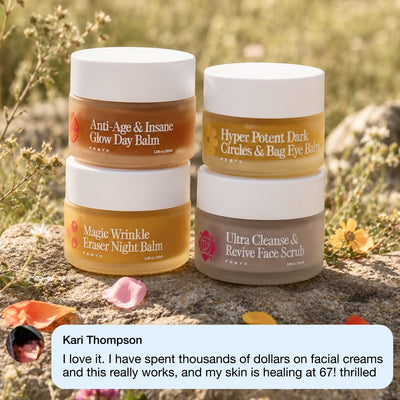
Die obige Routine erfordert Sanddornöl bei 2–5% in einer Squalan-Base und einen Jojoba-basierten Öl-Reiniger. Das komplette System kombiniert beide mit nordischen Botanikals speziell formuliert für Frauen 45+. Kein synthetischer Duftstoff, keine Hormone-Disruptoren, keine wasserbasierten Füllstoffe.
Kaufen Sie das komplette System – Sparen Sie 40%Wenn natürlich nicht ausreicht: Die Brücke zu klinischer Behandlung
Natürliche Behandlung funktioniert für viel Rosazea, nicht alles. So zu tun, als ob hilft dir nicht.
Die Signale sind konkret. Hartnäckige Pusteln trotz 8 bis 12 Wochen einer sauberen Routine. Augensymptome wie körnig, brennend oder wässrig, was auf okulare Rosazea hindeuten kann und ärztliche Aufmerksamkeit erfordert. Schnelle Verschlimmerung. Verdickung der Haut auf der Nase (Rhinophyma). Wie Dr. Sam Bunting sagt, "Rosazea ist nicht ein Schönheitsproblem, es ist eine medizinische Bedingung." Behandle sie wie eine, wenn sie sein muss.
Azelainsäure ist der Brücken-Wirkstoff zwischen natürlich und klinisch. Sie ist natürlich aus Getreide abgeleitet, über den Ladentisch bei 10% erhältlich und auf Rezept bei 15–20%. Sie hat RCT-bewiesene Wirksamkeit (51% Erythem-Verbesserung, N=1.624), und Dermatologen unterstützen sie routinemäßig. Sie müssen nicht zwischen natürlich und klinisch wählen, wenn Azelainsäure in beiden Lagern sitzt.
Was ein Dermatologe hinzufügt, das natürliche Behandlung nicht erreichen kann: topisches Ivermectin, das speziell den Demodex-LL-37-Pfad anvisiert. Brimonidin und Oxymetazolin für schnelle vaskuläre Konstriktion. Verschreibungsstärke-Metronidazol. Orales niedriges Doxycyclin-Dosis bei sub-antimikrobiellen Dosen für schwere PPR, das als anti-entzündlich statt Antibiotikum funktioniert. IPL und gepulste Farbstoff-Laser für sichtbare Telangiektasien in ETR, was kein Topical löscht.
Die Rahmung ist wichtig. Eine Dermatologen-Verschreibung und Ihre Ceramid-Sanddorn-Sonnenschutz-Routine sind nicht Konkurrenten. Die meisten Dermatologen wollen Sie auf einer beruhigenden, Barriere-Reparatur-Routine unter ihren Verschreibungen, weil eine gesunde Barriere ist, was Ivermectin oder Metronidazol erträglich macht.
Wenn Ihre Rosazea in Perimenopause auftauchte, fragen Sie einen Dermatologen, der hormonale Haut versteht, oder koordinieren Sie mit Ihrem Gynäkologen. Sie stellen andere Fragen als ein Generalist, und das Gespräch kann beinhalten, ob Hormontherapie angemessen ist, das außerhalb jeder topischen Routine liegt.