 Account


Die wirksamste natürliche Aknebehandlung für Frauen über 40 verbindet Zink, Omega-3-Fettsäuren, Sanddornöl und Darmunterstützung. Hormonelle Ausbrüche nach 40 brauchen barriereschonende Pflege, da Benzoylperoxid und starke Retinoidie die lipidverarmte Haut austrocknen und alles verschlimmern. Viele Frauen bevorzugen natürliche Alternativen zur Behandlung leichter bis mittelschwerer Akne genau aus diesem Grund.
Es stellt sich heraus, dass 26 % der Frauen zwischen 40 und 49 Jahren Akne bekommen, verglichen mit 12 % der Männer. Das ist nicht selten. Es wird nur kaum darüber gesprochen.
Acne vulgaris beginnt in den Haarfollikeln, wo Öl und abgestorbene Hautzellen die Öffnung verstopfen. Cutibacterium acnes-Bakterien vermehren sich dann dort und lösen Entzündungen aus. So entsteht Akne in jedem Alter.
Was sich nach 40 ändert, ist die Haut drum herum. Der Östrogenspiegel sinkt und schwächt Ihre Schutzbarriere. Progesteron fällt, wodurch der natürliche entzündungshemmende Schutz wegfällt.
Die relative Wirkung von Testosteron steigt und treibt die Ölproduktion in die Höhe. Diese Hautveränderungen in den Wechseljahren verändern, wie Ihre Haut auf alles reagiert, das Sie auftragen.
Die Ceramide, die die Wechseljahre aufbrauchen, sind die Linolsäure-haltigen, und zu Unreinheiten neigende Haut ist bereits arm an Linolsäure. Zwei Probleme, eine Fettsäure.
10 barriereschonende natürliche Behandlungen für hormonelle Akne bei Frauen 45+

1. Sanddornöl: Klärt Ausbrüche und repariert die Barriere
Auf lipidverarmter Haut verursachen verschreibungspflichtige Retinoidie häufig Schuppung, Brennen und Lichtempfindlichkeit. Sanddorn bietet einen sanfteren Weg.
Sanddorn ist reich an Beta-Carotin, einem natürlichen Vitamin-A-Vorläufer. Ihr Körper wandelt es in seinem eigenen Tempo um und unterstützt die Zellerneuerung, die abgestorbene Hautzellen aus dem Follikel drückt und hilft, Poren ohne Reibung zu öffnen. Das ist wichtig, wenn Ihre Haut nach 45 neue Hautzellen langsamer bildet.
Omega-7 (Palmitoleinsäure) ist der zweite Grund, warum es funktioniert. Es ist strukturell ähnlich wie menschliches Sebum und unterstützt daher die Lipidbarriere direkt und reduziert Wasssverlust.
So verwenden Sie es: Ein bis zwei Tropfen nachts, zwischen sauberen Fingerkuppen angewärmt. Es ist tief orange, daher verdünnen Sie es, um Verfärbungen zu vermeiden. Nicht komedogen, und Rötungen lassen normalerweise innerhalb einer bis zwei Wochen nach.
2. Zink: Das Mineral, das Akne ohne Nebenwirkungen beruhigt
Zink hilft, die Talgdrüsenaktivität zu senken, die sich in der Perimenopause verstärkt, was bedeutet, weniger von dem dicken überschüssigen Öl, das Follikel verstopft. Topisches Zink in einer Konzentration von 5 % hat Vorteile gezeigt, und orales Zink hat noch stärkere Belege.
Zink wirkt auch entzündungshemmend, was wichtig ist, da Akneausbrüche auf reifer Haut schmerzhafter sind und langsamer heilen.
So verwenden Sie es: Zinkbisglycin wird gut aufgenommen und verursacht die wenigsten Übelkeitserscheinungen. Nehmen Sie es mit Nahrung ein und fügen Sie 2 mg Kupfer hinzu, wenn Ihre Dosis 40 mg übersteigt. Erwarten Sie eine Besserung nach acht bis 12 Wochen.
3. DIM: Östrogenstoffwechsel an der Quelle verschieben
Östrogen gibt es in mehr und weniger entzündlichen Formen, und welche Ihr Körper bevorzugt, ist für Ihre Haut wichtig.
DIM (Diindolylmethan) stammt aus Kreuzblütengewächsen wie Brokkoli und Grünkohl. Diese Gemüsesorten helfen, überschüssige Hormone, die mit Akne verbunden sind, zu beseitigen, indem sie den Östrogenstoffwechsel in Richtung der schützenden 2-Hydroxy-Form verschieben und weg von der entzündlichen 16-Alpha-Hydroxy-Form.
So verwenden Sie es: 100 bis 200 mg täglich mit einer fetthaltig Mahlzeit. Geben Sie ihm zwei bis drei Monate Zeit. Die Belege sind vielversprechend, aber noch im Entstehen.
4. Omega-3-Fettsäuren: Der Mangel, den fast jeder Aknepatient teilt
Eine Studie von 2024 im Journal of Cosmetic Dermatology ergab, dass 98,3 % der Aknepatientinnen bei der Aufnahme ein Omega-3-Defizit aufwiesen. Das Kohort bestand zu 97 % aus Frauen mit durchschnittlich neun Jahren anhaltender Akne.
Nach 16 Wochen mediterraner Ernährung plus algenbasierter Supplementierung sanken sowohl entzündliche als auch nicht-entzündliche Akneverletzungen, und die meisten Patienten bemerkten eine Veränderung um die 40 Tage herum.
Der Mechanismus läuft über IGF-1, denselben Wachstumsfaktor, der mit Blutzuckerspitzen ansteigt. Omega-3-Fettsäuren senken serum-IGF-1 und erhöhen sein Bindungsprotein, das es daran hindert, Rezeptoren auf den ölproduzierenden Zellen in Ihren Follikeln zu erreichen. Sie reduzieren auch entzündliche Zytokine wie IL-1, IL-6 und IL-8.
Ein Mangel zu beheben ist einer der zuverlässigeren Wege, Akne von innen heraus zu lindern, und die Vorteile erstrecken sich auf die Herz-Kreislauf- und Gelenkgesundheit. Die Studie hatte keine Placebo-Gruppe, daher bewegten sich Ernährung und Nahrungsergänzung zusammen.
So verwenden Sie es: Die Studie verwendete 900 mg kombiniertes EPA und DHA täglich, ansteigend auf 1,2 g. Von Drittanbietern getestetes Fischöl oder algenbasiert, wenn Sie eine pflanzliche Quelle bevorzugen. Nehmen Sie es mit einer mahlzeit ein, die Fett enthält.
5. Darmgesundheit und Ernährung: Was unter der Oberfläche passiert
Die Mikrobiomforschung hat ausgeprägte Darmalterationen bei Menschen mit Akne gefunden und unterstützt damit das, was Forscher die Darm-Haut-Achse nennen. Ihr Darm beherbergt Bakterien namens das Estrobolom, das Östrogen verstoffwechselt, und wenn diese Flora gestört wird, kann überschüssiges Östrogen stattdessen rezirkulieren, anstatt ausgeschieden zu werden.
Hoher Milchkonsum wurde auch über mehrere Beobachtungsstudien hinweg mit mittelschwerer oder schwerer Akne verbunden.
Was hilft: Probiotika mit verschiedenen Stämmen, besonders Lactobacillus, plus fermentierte Lebensmittel. Reduzieren Sie verarbeitete Lebensmittel und raffinierte Kohlenhydrate, und unterstützen Sie die Leberfunktion mit Milchsäuel-Tee oder Löwenzahnwurzeltee. Ein gesunder Darm behebt zugrundeliegende Ursachen anstatt nur Symptome.
6. Hagebuttenöl: Das Verblassen der dunklen Flecken, die Akne hinterlässt
Mit 50 kann eine Markierung, die früher in Wochen verblasst, sechs bis 12 Monate anhalten. Eine klinische Studie an 108 Erwachsenen ergab, dass Hagebuttenöl, zweimal täglich aufgetragen, die Narbenerscheinungswerte nach 6 bis 12 Wochen im Vergleich zu keiner Behandlung verbesserte. Dies waren postchirurgische Narben und keine Aknenarben, daher behandeln Sie es als stützende Evidenz.
Hagebutte ist reich an Polyphenolen und Vitamin E und bringt entzündungshemmende Eigenschaften neben antioxidativer Wirkung.
Die nützlichere Schicht ist Lipidchemie. Akneempfindliche Haut hat weniger Linolsäure, und eine Überprüfung der Lipidmediatoren bei Akne beschreibt, wie dieser Mangel vermutlich die Follikelhyperkeratose antreibt, die hinter der Komedonebildung steckt.
Niedrige Linolsäure schwächt auch die Barriere, wodurch entzündliche Substanzen leichter eindringen können. Hagebutte ist reich an Linolsäure und behebt diesen Mangel dort, wo er beginnt.
So verwenden Sie es: Ein bis zwei Tropfen nachts. Lagern Sie in dunklem Glas und verbinden Sie es mit Sanddornöl aus Punkt 1. Wenn Sie während des Verblassens von dunklen Flecken längere Zeit im Freien verbringen, hilft ein Mineralsonnen-schutz mit Zinkoxid.
7. Topische botanische Mittel, die es wert sind, bekannt zu sein
Mehrere Botanicals haben topische Belege hinter sich, obwohl die Qualität variiert und auch das Reizungsrisiko. Grüntee-Extrakt reduziert Talgproduktion und Pickel bei topischer Anwendung. Honig hat antibakterielle Eigenschaften, die Hautwunden beruhigen können.
Hamamelis straffen Poren und reduzieren oberflächliche Bakterien, können aber auf Haut, die bereits lipidverarmt ist, austrocknend wirken.
Apfelessig ist die riskanteste Gruppe, da unverdünnte Anwendung dünne Haut brennt. Alles Saure auf einer kompromittierten Barriere kostet nach 45 mehr, als es bringt.
So verwenden Sie es: Machen Sie einen Patch-Test 24 Stunden vor der Gesichtsanwendung, um eine Reaktion auszuschließen. Wenden Sie niemals unverdünnt an. Nur lokale Behandlung.
8. Jojobaöl: Der kontraintuitive Talgregulator
Jojoba ist nicht wirklich ein Öl. Es ist ein flüssiges Wachsester, strukturell fast identisch mit menschlichem Talg, und diese Ähnlichkeit signalisiert Ihren Öldrüsen, die Produktion zu verlangsamen.
Die Haut auszutrocknen hat den gegenteiligen Effekt. Eine beschädigte Barriere überschwemmt sich selbst mit mehr Öl, um den Schaden zu reparieren.
Zu lernen, eine beschädigte Hautbarriere natürlich zu reparieren, bricht diesen Kreislauf, weshalb die Unterstützung von Lipiden hilft, Ausbrüche zu verhindern, anstatt sie nur zu lindern.
Jojoba ist nicht komedogen und funktioniert sowohl auf öliger Haut als auch auf trockener Haut, was in der Perimenopause häufig ist, wenn sich Ihre T-Zone und Wangen unterschiedlich verhalten.
So verwenden Sie es: Nachts als Träger für ätherische Öle oder als erster Schritt einer Doppelreinigung.
9. Vitex (Mönchspfeffer): Kräuterunterstützung für die Perimenopause
Vitex agnus-castus wirkt auf die Hypophyse, um das luteinisierende Hormon und Prolaktin zu regulieren. Mönchspfeffer unterstützt ein gesünderes Progesteron-zu-Östrogen-Gleichgewicht und glättet die Schwankungen, die zyklische Ausbrüche antreiben.
Eine achtwöchige randomisierte kontrollierte Studie zeigte niedrigere Symptomwerte für Wechseljahresstörungen und vasomotorische Symptome im Vergleich zu Placebo, ohne schwerwiegende Nebenwirkungen. Eine separate Studie ergab, dass Mönchspfeffer menstruationsbezogene Akne verbesserte.
Vitex eignet sich für die Perimenopause, wenn Zyklen noch vorhanden sind. Nach den Wechseljahren ist seine Nützlichkeit weniger klar.
So verwenden Sie es: 20 bis 40 mg standardisierter Extrakt täglich, für drei bis fünf Monate. Wie bei allen Kräuterpräparaten, vermeiden Sie es, wenn Sie Hormonmedikamente nehmen.
10. Stress, Schlaf und die Adaptogen-Frage
Cortisol treibt Akne unabhängig von Sexualhormonen an, erhöht die Talgproduktion und schwächt die Barriere.
Die nicht ergänzenden Hebel sind am stärksten. Priortät auf Schlaf hilft, Cortisol zu regulieren und Entzündungen zu reduzieren, was für die Hautgesundheit mehr tut als die meisten Produkte. Sport senkt Insulin und verbessert die Glukoseaufnahme und trifft denselben Blutzuckerpfad.
Nicht jedes beliebte Präparat passt zu jedem Hormonalprofil, und einige verschlimmern Akne.
Wenn Sie die Mischung und Dosierung lieber überspringen und mit etwas beginnen möchten, das bereits für reactive, ausbruchsanfällige Haut über 40 formuliert ist, liefert ein wasserloser Balsam diese Arktische Pflanzen in voller Kraft.
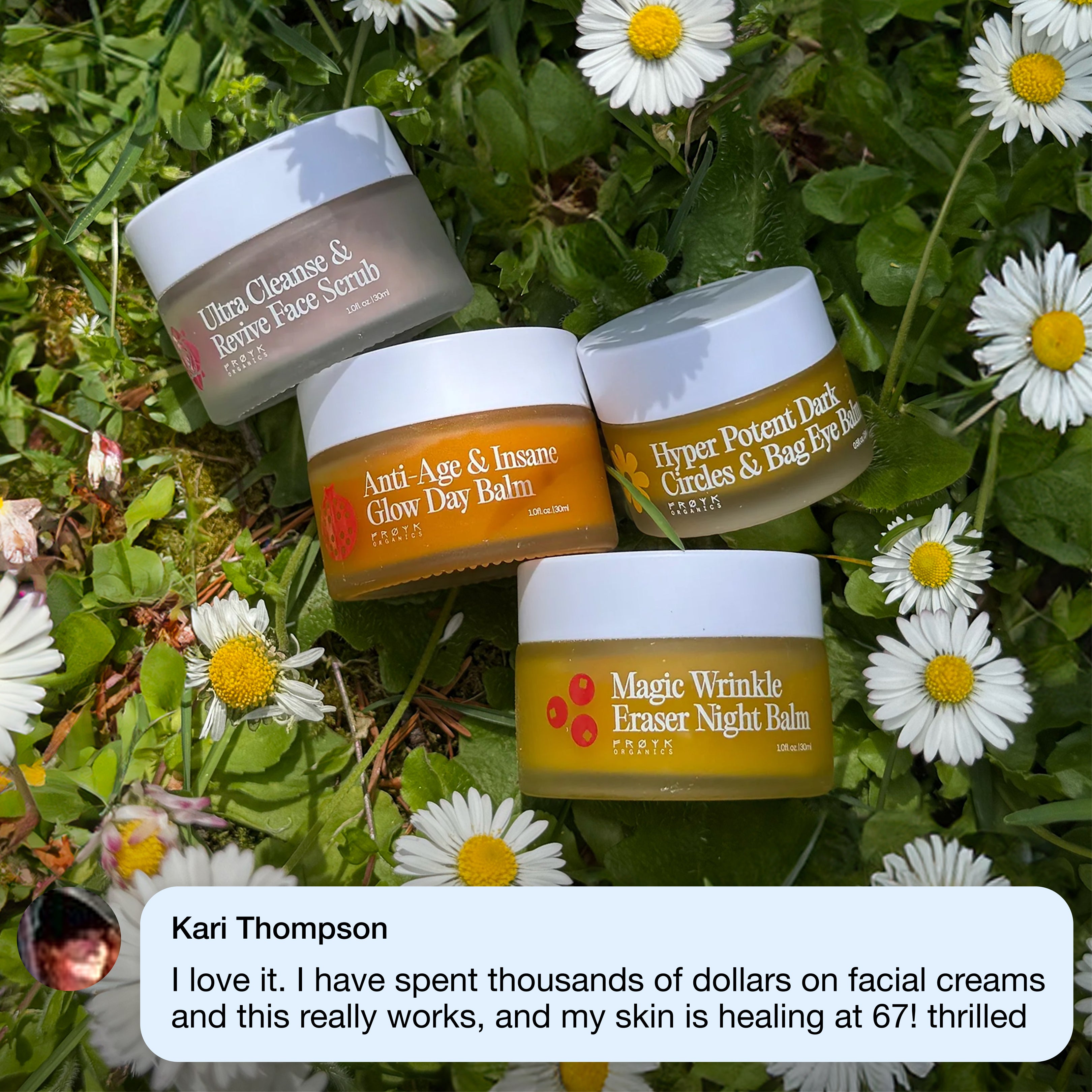
Arktische Wildpflanzen und Bio-Bienenwachs. Kein Wasser, keine künstlichen Düfte. Vier Balsame in einer Routine, die die Schutzbarriereripide mit langanhaltender Ausstrahlung versorgen, mit 60-tägiger Geld-zurück-Garantie.
Kaufen Sie das System heuteHäufig gestellte Fragen
Warum bekomme ich plötzlich in meinen 40ern oder 50ern Akne, nachdem ich jahrelang reine Haut hatte?+
Kann ich die gleichen Aknebehandlungen verwenden, die ich als Teenager verwendet habe?+
Ist es sicher, Gesichtsöle auf akneanfälliger reifer Haut zu verwenden?+
Wie lange dauert es, bis ich Ergebnisse sehe?+
Warum halten Aknenarben jetzt so viel länger auf meiner Haut?+