 Account


Bis zu 90 % Ihrer Feuchtigkeitscreme besteht aus Wasser. Nicht die Arktischen Pflanzen, nicht die Wirkstoffe, nicht die Inhaltsstoffe, für die Sie bezahlt haben – nur Wasser, der billigste Filler in der Beauty-Industrie. Und nach 40 arbeitet diese verdünnte Formel still gegen Ihre Haut.
Wasserfreie Hautpflege dreht diese Rechnung um. Statt Wasser ist jeder Inhaltsstoff funktional: Öle, Buttern, Wachse und Pflanzenextrakte, die sofort wirken. Auch anhydrische Hautpflege genannt, ist sie konzentriert, sodass eine kleine Menge mit der Fingerspitze lange reicht.
Frøya Organics ist genau auf diese Weise formuliert – mit wilden Arktischen Wildpflanzen und biologischem Bienenwachs, ohne Wasser und ohne Filler. Das Anti-Aging Pflegesystem für reife Haut ist eine vierstufige wasserfreie Routine, die genau für diesen Wechsel gemacht ist. Das bedeutet, dass jeder Balsam dicht mit aktiven Wirkstoffen gefüllt ist, statt durch sie verdünnt zu werden.
Dieser Leitfaden behandelt, warum der wasserfreie Ansatz zu reifer Haut passt, welche Inhaltsstoffe in ölbasierten Formeln tatsächlich wirken, und eine einfache, wochenweise Anleitung zum Wechsel.
Wichtige Erkenntnisse
- Wasserfreie Hautpflege kommt ohne Wasser aus, sodass Öle, Buttern und Pflanzenextrakte Filler ersetzen und sofort wirken.
- Auch anhydrische Hautpflege genannt, ist sie konzentriert, sodass eine kleine Menge mit der Fingerspitze lange reicht.
- Nach 40 senkt ein sinkender Östrogenspiegel die Ceramide und schwächt die Hautbarriere – deshalb eignen sich ölbasierte Formeln so gut für reife Haut.
- Ohne Wasser braucht man weniger Konservierungsstoffe, da Bakterien, Hefen und Schimmelpilze Wasser zum Wachsen benötigen.
- Sanddorn, Wildrose, Squalan und Jojoba sind die Pflanzenextrakte, die wasserfreie Formeln wirksam machen.
- Wechseln Sie langsam: Beginnen Sie nur mit dem Reiniger, dann fügen Sie alle paar Tage über vier bis sechs Wochen neue Produkte hinzu.
Warum wasserfreie Hautpflege bei reifer Haut besser funktioniert

Wasserfreie Hautpflege funktioniert bei reifer Haut besser, weil sie die Barriere unterstützt, statt Trockenheit nur zu kaschieren – daher ist sie das Fundament von natürlicher Hautpflege für reife Haut. Sie pflegen morgens und abends, doch Ihre Haut fühlt sich jedes Jahr trockener an. Das hängt mit Ihrer verändernden Hautbiologie zusammen.
Nach 40 reduziert sinkender Östrogenspiegel die Ceramidproduktion Ihrer Haut. Ceramide sind die Lipide, die Ihre Barriere zusammenhalten, und wenn sie nach der Menopause kürzer werden und abnehmen, entweicht Feuchtigkeit schneller. Das ist transepidermaler Wasserlust oder TEWL, und zeigt sich als Spannung, Empfindlichkeit und Trockenheit, die immer wiederkehrt.
Wasserbasierte Hautpflege kann das schlimmer machen. Wenn Wasser der Hauptinhaltsstoff ist, verdunstet diese Oberflächenfeuchtigkeit innerhalb weniger Stunden und kann noch mehr Wasser aus der Haut ziehen, während sie verschwindet.
Ölbasierte, wasserfreie Formeln gehen einen anderen Weg. Sie integrieren sich in die eigene Lipidschicht des Stratum Corneum und stärken die Barriere von innen heraus – deshalb eignet sich der wasserfreie Ansatz so gut für empfindliche Haut mit Barrierestörung. Frøyas Bienenwachs und Pflanzenöle sind die natürliche Antwort auf die Lipide, die reife Haut verliert, und halten die Feuchtigkeit, die die Haut bereits produziert, statt Wasser hinzuzufügen, das wieder verdunstet.
Der Verzicht auf Wasser hat noch einen Vorteil: weniger Konservierungsstoffe. Bakterien, Hefen und Schimmelpilze brauchen alle Wasser zum Wachsen, also stabilisiert die Formel ohne künstliche Konservierungsstoffe, mit denen empfindliche reife Haut oft kämpft.
Was sich nach 40 in der Haut verändert: Der Östrogenspiegel sinkt und die Ceramidproduktion sinkt mit ihm – die Barriere wird schwächer und die TEWL steigt. Wasserbasierte Produkte verdunsten und können diese Trockenheit vertiefen. Ölbasierte Pflanzenextrakte tun das Gegenteil und ersetzen die Lipide, die die Barriere braucht, um Feuchtigkeit zu halten.
Wichtige Inhaltsstoffe, die wasserfreie Hautpflege wirksam machen
Wasserfreie Formeln konzentrieren aktive Inhaltsstoffe, statt sie zu verdünnen. Weil kein Wasser Platz einnimmt, sitzt jeder Pflanzenextrakt höher auf der Zutatenliste mit größerer Potenz. Das ist der ganze Sinn einer anhydrischen Basis.
Sanddorn ist der Spitzenstoff. Er ist ein starkes Antioxidans aus einer kleinen nordischen Frucht, reich an Omega-7, der Fettsäure, die natürlicherweise in Ihrer Haut vorkommt. Das macht ihn zur perfekten Wahl, um Feuchtigkeit und Weichheit in reifer Haut zu unterstützen.
Eine starke wasserfreie Routine wird nie auf einem Öl allein aufgebaut. Die unterstützenden Pflanzenextrakte erfüllen jeweils eine bestimmte Aufgabe.
- Wildrose: Vitamine und Fettsäuren, die Teint und Zellerneuerung unterstützen
- Squalan: leichte Feuchtigkeit, die schnell bei allen Hauttypen aufgenommen wird
- Jojoba: der pflanzliche Stoff, der Ihren eigenen Hautölen am ähnlichsten ist, daher gut verträglich
- Bienenwachs: eine schützende Schicht, die Feuchtigkeit versiegelt und die Barriere schützt
Zusammen geben diese Frøya die pflanzlichen Retinol-Alternative-Vorteile, die viele Frauen wollen, ohne die Härte, die einige konventionelle Wirkstoffe mit sich bringen. Die Pflanzenextrakte sind bereits in jeden Balsam eingearbeitet, sodass Sie nichts selbst mischen oder abmessen müssen.
Es gibt auch einen Qualitäts- und Stabilitätsvorteil, den Sie kennen sollten. Viele Antioxidanzien bauen sich schnell ab, sobald Wasser in der Formel ist. In einem anhydrischen, ölbasierten System bleiben öllösliche Antioxidanzien viel länger wirksam.
Warum Konzentration wichtig ist: Ohne Wasser, das die Formel verdünnt, sitzen Pflanzenextrakte mit höherer Potenz. Das bedeutet mehr Vorteile pro Fingerspitze, und weniger Produkt wird täglich benötigt.
Wie Sie zu einer wasserfreien Hautpflegeroutine wechseln
Wechseln Sie langsam, ein Produkt nach dem anderen, und geben Sie Ihrer Haut Raum sich anzupassen. Eine allmähliche Veränderung lässt Ihre Barriere sich ohne Überlastung anpassen. Zu schnell zu gehen ist der häufigste Fehler.
Hier ist ein einfacher vierwöchiger Weg.
- Beginnen Sie mehrere Tage nur mit dem Reiniger. Ersetzen Sie Ihren Schaum- oder Gel-Reiniger durch eine Öl- oder Balsam-Reinigung, die Ihre natürlichen Öle nicht abzieht. Entfernen Sie zuerst Make-up damit, dann spülen Sie. Machen Sie einen Patch-Test auf Ihrem Kiefer, wenn Ihre Haut empfindlich ist.
- Fügen Sie alle paar Tage neue Produkte hinzu. Sobald Ihre Haut sich wohl fühlt, bringen Sie den nächsten Schritt. Langsames Hinzufügen schlägt, alles auf einmal zu ändern.
- Ersetzen Sie Ihre Feuchtigkeitscreme durch einen Balsam. Ein konzentrierter Balsam ersetzt eine wasserlastige Creme. Drücken Sie eine kleine Menge mit der Fingerspitze in die saubere Haut.
- Bewerten Sie und passen Sie an. Eine Hybrid-Routine ist während des Einschwungprozesses ok. Geben Sie Ihrer Haut vier bis sechs Wochen, um sich vollständig anzupassen.
Erwarten Sie eine kurze Anpassungsphase. Eine leichte Hautentgiftung ist während des Übergangsprozesses normal, wenn sich Ihre Haut neu kalibriert. Es beruhigt sich meist in den ersten beiden Wochen.
Bei der Technik selbst gilt: weniger ist mehr. Eine winzige Menge mit den Handflächen in die Haut gedrückt ist genug, und wenn Ihre Haut leicht orange aussieht, haben Sie zu viel verwendet. Siehe wie man wasserfreie Balsame aufträgt für die vollständige Routine.
Die 60-Sekunden-Regel: Tragen Sie Ihren Balsam auf, dann warten Sie eine volle Minute, bevor Sie urteilen. Die meisten „zu fettig"-Reaktionen sind einfach zu viel Produkt, nicht das falsche Produkt.
Die wasserfreien Balsame für reife Haut

Frøyas vierstufige Routine ist komplett ohne Wasser aufgebaut, sodass jeder Schritt aus konzentrierten Pflanzenextrakten und nicht aus Fillern besteht. Die Balsame sind sanft, für empfindliche und reife Haut gemacht, ohne künstlichen Duft und nichts Hartes. Hier ist, was jeder Balsam tut und wann man ihn verwendet.
|
Schritt |
Produkt |
Was es tut |
Wann man es verwendet |
|
Reinigung |
Reinigt sanft, ohne Ihre natürlichen Öle abzuziehen – ein wasserfreies Puder, das mit Wasser schäumt |
2- bis 3-mal pro Woche |
|
|
Tag |
Leichter Morgen-Balsam, der Tagfeuchte und Glanz unterstützt |
Jeden Morgen |
|
|
Nacht |
Glättet das Aussehen feiner Linien und unterstützt die Barriere über Nacht |
Jeden Abend |
|
|
Auge |
Beruhigt die empfindliche Augenpartie und lindert das Aussehen von Schwellungen und dunklen Ringen |
Morgens und abends |
Jeder Balsam ist bereits fertig gemixt, sodass es nichts zu mischen oder selbst abzumessen gibt – nur eine kleine Menge mit der Fingerspitze einer sanften, konzentrierten Formel.
Mythen über wasserfreie Hautpflege, die Sie bremsen
Ein paar Missverständnisse halten Menschen davon ab, wasserfreie Hautpflegeprodukte zu probieren. Hier ist, was die Evidenz eigentlich zeigt.
Mythos 1: Wasserfreie Hautpflege kann nicht hydratisieren.
Sie stärkt Ihre Lipid-Barriere, sodass die Haut die Feuchtigkeit, die sie bereits produziert, behält. Die Hydratation hält länger, weil sie Barriereschwäche behandelt, nicht nur Oberflächentrockenheit. Das ist tiefere Hydratation als ein schneller Wasserschub.
Mythos 2: Sie ist zu fettig.
Öle wie Squalan und Jojoba ziehen sauber ein, wenn sie in kleiner Menge verwendet werden. Zwei bis vier Tropfen oder eine Fingerspitze Balsam ist reichlich. Wenn es sich nach 60 Sekunden noch fettig anfühlt, haben Sie zu viel verwendet.
Mythos 3: Sie funktioniert nur bei trockener Haut.
Leichte Öle helfen, die Ölproduktion zu regulieren, indem sie die Barriere unterstützen, die Überproduktion treibt. Wenn die Barriere stark ist, produziert die Haut oft weniger Öl im Übermaß. Deshalb kann wasserfreie Pflege auch für Mischhaut und zu Unreinheiten neigende Haut geeignet sein.
Mythos 4: Sie ist zu teuer.
Sie verwenden einen Bruchteil des Produkts, da konzentrierte Balsame nicht verdünnt sind. Vergleichen Sie die Kosten pro Woche, nicht pro Flasche. Ein kleiner Tiegel konzentrierter Balsam überdauert oft einen größeren Tiegel wasserlastige Creme.
Dieser Artikel dient nur zu Informationszwecken und ist keine ärztliche Beratung. Jede Haut ist anders, also testen Sie neue Produkte und sprechen Sie mit einem qualifizierten Fachmann, wenn Sie eine Hautkondition oder ein fortbestehendes Problem haben. Die Ergebnisse variieren individuell.
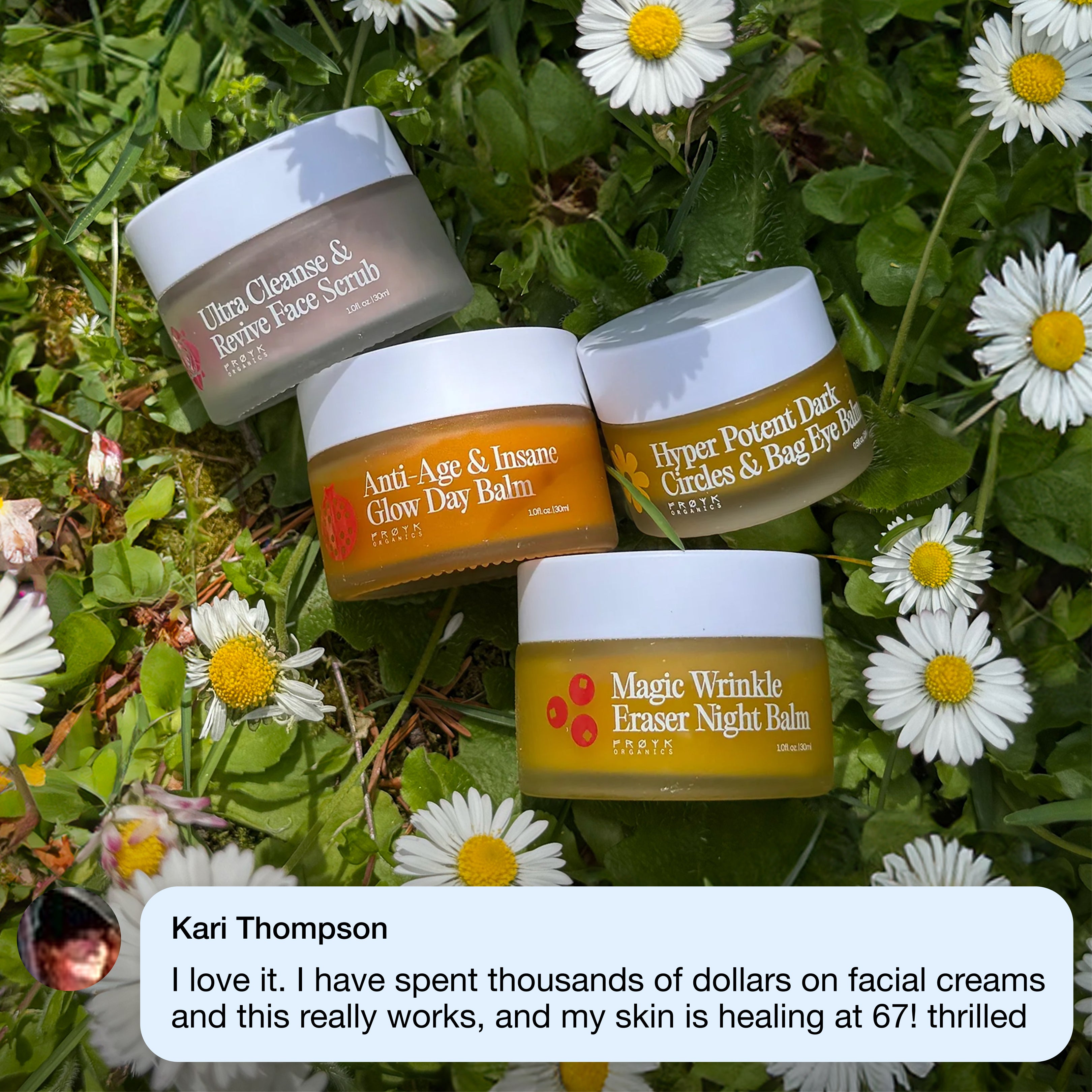
Wilde Arktische Wildpflanzen und biologisches Bienenwachs. Null Wasser, null künstlicher Duft. Vier konzentrierte Balsame, die Ihre Barriere mit den Lipiden versorgen, die sie verliert – mit 60-Tage-Geld-zurück-Garantie.
Kaufen Sie das System heuteHäufig gestellte Fragen
Was ist der Unterschied zwischen wasserfreier und wasserloses Hautpflege?+
Wann begann der Trend zu wasserfreier Kosmetik?+
Warum benötigen wasserfreie Produkte keine künstlichen Konservierungsstoffe?+
Kann wasserfreie Hautpflege meine gesamte Pflegeroutine ersetzen?+
Ist wasserlose Hautpflege besser für die Umwelt?+
Ist wasserlose Hautpflege sicher für empfindliche Haut?+
Wie lange dauert es, bis ich Ergebnisse sehe?+