 Account


Krepartige Haut schleicht sich nicht langsam ein. Sie erscheint fast über Nacht, meist irgendwo zwischen 48 und 55, und die meisten Frauen, mit denen ich spreche, geben sich selbst die Schuld. Sie sagen mir, sie hätten mehr Sonnencreme verwenden sollen. Sie sagen, sie hätten nicht so schnell abnehmen sollen.
Der wahre Übeltäter ist leiser und struktureller Natur. Bis zu 30% des Hautkollagens gehen in den ersten fünf Jahren nach der Menopause verloren, danach weitere 2% pro Jahr. Die Hautdicke nimmt pro postmenopausalem Jahr um 1,13% ab. Das ist keine Alterung im kosmetischen Sinne. Das ist ein östrogenabhängiges strukturelles Versagen, und krepartige Haut reagiert auf die richtigen Impulse, sobald Sie aufhören, sie als reines Oberflächenproblem zu behandeln.
Was jetzt folgt, ist das Protokoll, das ich meiner eigenen Mutter geben würde. Botanisch, in Schichten aufgebaut und ausgerichtet auf das, was die dermo-epidermale Verbindungszone tatsächlich wieder aufbaut. Keine Wunderversprechen, keine Marketingsprache, nur das, was funktioniert, wenn Sie die richtigen Wirkstoffe konsequent kombinieren.
1. Verstehen Sie zuerst den Zusammenhang zwischen Menopause und krepartiger Haut
Eine Klientin erzählte mir einmal, ihre Haut habe sich innerhalb von sechs Wochen verändert. Sechs Wochen. Sie hatte sich das nicht eingebildet.
Östrogenrezeptoren sitzen direkt in den Fibroblasten Ihrer Haut, den Zellen, die Kollagen produzieren. Sinkt der Östrogenspiegel, erhalten diese Zellen sofort das Signal. Die Produktion verlangsamt sich. Bestehendes Kollagen baut sich schneller ab, als es ersetzt wird. Das strukturelle Gerüst, das Ihre Haut fest hielt, beginnt von innen heraus dünner zu werden.
Deshalb reicht eine Feuchtigkeitscreme allein nicht aus. Sie sind nicht dehydriert. Ihnen fehlen die strukturellen Bausteine, die Östrogen früher unterstützt hat, darunter die Lipide und Fettsäuren, die Ihre Haut braucht, um sich selbst zusammenzuhalten. Wasser entweicht. Die Barriere bricht zusammen. Die Haut beginnt sich zu falten und zu knittern, wie nie zuvor. Ausführlicher gehe ich in meinem Beitrag über die acht Arten, wie die Menopause Ihre Haut verändert auf den tieferen Zusammenhang ein.
Das Fazit: Krepartige Haut ist ein strukturelles Problem, kein kosmetisches. Sobald Sie sie als Wiederaufbau-Projekt statt als Glättungs-Projekt behandeln, ergibt alles Folgende einen Sinn.
2. Machen Sie Sanddornöl zur Grundlage Ihrer Routine
Ihr Körper produziert eine bestimmte Fettsäure namens Palmitoleinsäure, auch bekannt als Omega-7, und deren Menge sinkt nach dem 60. Lebensjahr um 60%. Es gibt genau eine Pflanze, die reich genug ist, um sie zu ersetzen. Sanddorn.
Deshalb habe ich Frøya um diese Beere herum aufgebaut. Das ist keine Marketingentscheidung. Omega-7 ist für postmenopausale Haut strukturell unersetzlich, und fast nichts anderes in der Pflanzenwelt liefert es in nutzbaren Konzentrationen.
Sanddorn liefert außerdem mehr als 200 bioaktive Verbindungen, alle vier fettlöslichen Vitamine (A, D, E und K2) sowie etwa das 15-Fache des Vitamin-C-Gehalts von Orangen. Es ist eines der wenigen Öle, die die Haut wirklich nähren, statt nur auf ihr zu liegen.
Eine praktische Warnung. Unverdünnter Sanddorn färbt alles orange, einschließlich Kopfkissenbezüge, helle Shirts und Badetücher. Verdünnen Sie es für die Körperanwendung im Verhältnis 1:3 mit Rizinusöl. Im Gesicht verdünnen Sie es auf etwa 10% in einem leichteren Trägeröl. Morgens und abends auf feuchte Haut auftragen.
Am besten geeignet für: alle mit plötzlicher postmenopausaler Ausdünnung, besonders an den Oberarminnenseiten und am Dekolleté. Nicht geeignet, wenn: Sie den Verdünnungsschritt nicht einhalten können. Die tiefere Wissenschaft hinter dieser Beere erkläre ich ausführlich in meinem Ratgeber zu den Vorteilen von Sanddornöl.
3. Kombinieren Sie GLA-reiche Öle wie Borretsch und Nachtkerze
Borretschöl enthält 20 bis 24% Gamma-Linolensäure (GLA). Das ist die reichhaltigste pflanzliche GLA-Quelle der Welt. GLA wirkt auf Ebene der Fibroblasten wie ein sanftes östrogenähnliches Signal, genau das Signal, das Ihre Haut mit der Menopause nicht mehr erhalten hat.
Nachtkerzenöl ist die sanftere Variante mit 7 bis 10% GLA. Beide wirken. Borretsch wirkt bei stark ausgedünnter Haut schneller.
Die Reihenfolge, in der ich GLA-Öle schichte, ist entscheidend. Sanddorn kommt zuerst, weil es schwerer ist und das Omega-7-Defizit ausgleicht. Borretsch folgt danach, konzentriert auf die Bereiche, in denen die Ausdünnung am sichtbarsten ist. Oberarminnenseiten, Kieferlinie, Dekolleté. Die Lipidbasis des darunterliegenden Sanddorns treibt das GLA tiefer in die Haut.
Sie können Borretsch oder Nachtkerzenöl auch oral einnehmen, viele meiner Klientinnen machen beides. Topisch für die sichtbaren Bereiche, oral zur Unterstützung der Haut am gesamten Körper. Keines ersetzt das andere.
Wenn Sie Ihrer Routine nach Sanddorn noch ein weiteres Öl hinzufügen, dann Borretsch. Nachtkerzenöl ist die sanftere Alternative, falls Ihnen Borretsch für Ihren Hauttyp zu reichhaltig ist.
4. Ergänzen Sie Hagebuttenöl für Linolsäure und sanfte Zellerneuerung
Sie cremen zweimal täglich ein, und trotzdem wirkt Ihre Haut um 15 Uhr schon wieder ausgetrocknet. Das Problem ist nicht die Feuchtigkeit. Ihre Haut hat aufgehört, die spezifischen Fettsäuren zu produzieren, die Feuchtigkeit überhaupt erst binden.
Linolsäure ist eine dieser Fettsäuren. Sie ist ein Omega-6 und ein struktureller Bestandteil der Lipidbarriere Ihrer Haut. Sowohl das Altern als auch der sinkende Östrogenspiegel verringern die Fähigkeit Ihrer Haut, sie zu produzieren. Hagebuttenöl besteht zu 45% aus Linolsäure und ist damit eine der konzentriertesten topischen Quellen, die Sie anwenden können.
Was Hagebutte besonders wertvoll für krepartige Haut macht, sind die weiteren Inhaltsstoffe. Ein natürlich vorkommendes Trans-Retinsäure-Analogon unterstützt die Zellerneuerung, ohne die Reizungen von verschreibungspflichtigem Retinol. Das Vitamin C im Öl unterstützt die Kollagensynthese auf dermaler Ebene. Sie erhalten drei Vorteile in einem Inhaltsstoff: Barrierereparatur, sanfte Erneuerung und Kollagenunterstützung.
Eine 2015 in Clinical Interventions in Aging veröffentlichte Studie begleitete Frauen über 45, die Hagebuttenöl acht Wochen lang topisch anwendeten. Die Hautelastizität verbesserte sich messbar, ebenso wie Feuchtigkeits- und Rauheitswerte. Acht Wochen sind ein realistischer Zeitraum für sichtbare Veränderungen.
Die ausführlichere Erklärung der Chemie dahinter finden Sie in meinem Ratgeber zu Hagebuttenöl für reife Haut.
5. Tragen Sie Öle innerhalb von fünf Minuten nach dem Duschen auf feuchte Haut auf
Das ist die günstigste und schnellste Verbesserung, die Sie erzielen können. Trocknen Sie sich nicht vollständig ab.
Wenn Ihre Haut feucht ist, mit etwa 10 bis 20% Restfeuchtigkeit auf der Oberfläche innerhalb von zwei bis fünf Minuten nach dem Duschen, ist die Lipiddoppelschicht durchlässiger. Öle dringen tiefer ein, statt nur auf der Oberfläche zu liegen. Das Wasser wird unter der aufgetragenen Lipidschicht eingeschlossen.
Das Erwärmen des Öls in den Handflächen vor dem Auftragen ist wichtiger, als die meisten denken. Erwärmtes Öl zieht bis zu 40% besser ein als kaltes Öl direkt aus der Flasche. Geben Sie ein paar Tropfen in eine Handfläche, reiben Sie die Hände fünf Sekunden lang aneinander und drücken Sie das Öl dann in die feuchte Haut.
Auch die Richtung spielt eine Rolle. An Armen und Beinen streichen Sie aufwärts, gegen die Schwerkraft, um die Spannkraft zu unterstützen. Am Dekolleté und Hals verwenden Sie drückende statt ziehende Bewegungen. Die Haut dort ist zu dünn, um daran zu ziehen, besonders nach dem 50. Lebensjahr.
6. Verwenden Sie Milchsäure einmal wöchentlich, um die Haut von innen zu verdicken
Die meisten Säuren peelen. Milchsäure in klinischer Konzentration tut etwas anderes. Sie verdickt mit der Zeit tatsächlich die tieferen Hautschichten.
Das ist eine der eher kontraintuitiven Erkenntnisse der Dermatologie und wurde wiederholt nachgewiesen. Ammoniumlactat-Formulierungen mit 12% oder mehr glätten nicht nur die Oberflächenstruktur. Sie regen die Produktion von Glykosaminoglykanen an und erhöhen die Dichte des Stratum corneum, was bedeutet, dass die Haut strukturell dicker wird und nicht nur weicher. Dr. Dray hat den Mechanismus in einem Video mit mehr als 672.000 Aufrufen erklärt, und die zugrunde liegende Forschung stützt das.
Bei krepartiger Haut ist das einer der seltenen Wirkstoffe, die das strukturelle Grundproblem angehen. Die meisten Wirkstoffe verbessern nur das Erscheinungsbild. Milchsäure in klinischer Konzentration baut wieder auf.
Ein paar Regeln, an die ich mich halte. Verwenden Sie es einmal pro Woche, nicht öfter. Am Körper, besonders an Armen und Oberschenkelinnenseiten, verwenden Sie die 12%ige Ammoniumlactat-Formulierung. Im Gesicht wechseln Sie zu einem sanfteren Serum mit 5 bis 8% Milchsäure, da die Gesichtshaut die stärkere Version nicht regelmäßig verträgt. Auf trockene Haut auftragen, einwirken lassen und mit Ihrer Feuchtigkeitscreme oder Ölschicht abschließen.
Am besten geeignet für: krepartige Arme und Oberschenkelinnenseiten, wo die mechanische Verdickung am wichtigsten ist. Nicht geeignet, wenn: Sie Rosacea, verletzte Haut haben oder bereits regelmäßig Retinoide verwenden. Säuren und Retinoide auf bereits ausgedünnter postmenopausaler Haut zu kombinieren, ist der schnellste Weg zu einer geschädigten Barriere.
7. Probieren Sie Trockenbürsten vor dem Duschen (mit realistischen Grenzen)
Die Hälfte der Tipps zum Trockenbürsten im Internet ist falsch. Es beseitigt keine Cellulite. Es baut kein Kollagen auf. Aber es bewirkt etwas wirklich Nützliches, und vier Minuten sind es wert.
Eine Dermatologin der Cleveland Clinic bewertete Trockenbürsten mit 4 von 5 Punkten für Hautglanz. Die Mechanismen sind real, auch wenn das Marketing übertreibt. Die mechanische Peelingwirkung entfernt abgestorbene Hautzellen. Das Bürsten steigert die Durchblutung der Hautoberfläche. Die Bewegung unterstützt die Lymphdrainage in den Bereichen, in denen sich Lymphknoten konzentrieren.
Was es nicht bewirkt: Cellulite langfristig reduzieren, Kollagen aufbauen oder irgendetwas „entgiften“. Der Plumping-Effekt, den Sie direkt nach dem Bürsten sehen, ist vorübergehend und hält vielleicht eine Stunde an. Das sage ich lieber ehrlich, statt es zu überverkaufen.
Die Technik, die tatsächlich funktioniert: Verwenden Sie vor dem Duschen eine weiche Bürste mit Naturborsten auf trockener Haut. Die Bewegungen gehen aufwärts, in Richtung Herz, in langen, weiten Zügen. Drei bis fünf Minuten reichen völlig aus. Duschen Sie danach wie gewohnt und tragen Sie Ihre Öle anschließend auf die feuchte Haut auf.
Speziell bei krepartiger Haut liegt der Wert in der Vorbereitung. Trockenbürsten entfernt die mit dem Alter zunehmende Ansammlung abgestorbener Hautzellen, wodurch Ihre Öle nach dem Duschen besser einziehen können.
Am besten geeignet für: Arme, Oberschenkel und Rücken. Nicht geeignet, wenn: Sie eine entzündliche Hauterkrankung, verletzte Haut haben oder sich gerade in einem Schub befinden. Wenden Sie es niemals im Gesicht oder am Dekolleté an. Die Haut in diesen Bereichen ist zu dünn, um die Reibung zu vertragen.
8. Nutzen Sie Gua Sha zur Durchblutungsförderung an Gesicht, Hals und Dekolleté
Drei Minuten pro Abend. Das ist der Zeitaufwand. Gua Sha ist die einzige Technik, die ich für das Dekolleté empfehlen würde, den Bereich, in dem krepartige Haut zuerst auftritt und am schwersten zu behandeln ist.
Das Timing ist entscheidend. Gua Sha wirkt am besten, nachdem Sie Ihre Öle aufgetragen haben, nicht davor. Das Werkzeug muss auf geschmierter Haut gleiten, und der Druck treibt zugleich die Wirkstoffe des Öls tiefer in die Dermis. Sie erhalten zwei Vorteile aus einer Technik.
Grundprinzipien der Technik. Halten Sie den Stein in einem 45-Grad-Winkel zur Haut. Verwenden Sie leichten Druck, nicht das kräftige Schaben, das man manchmal online sieht. Die Bewegungen verlaufen im Gesicht immer aufwärts und nach außen, am Hals abwärts in Richtung Schlüsselbein, entsprechend der Lymphrichtung.
Speziell für das Dekolleté: vertikale Bewegungen vom Schlüsselbein aufwärts Richtung Kinn, danach horizontale Züge vom Brustbein aus zu jeder Schulter hin. Drei bis fünf Durchgänge pro Richtung. Durchgehend leichter Druck. Ein Tropfen mit ätherischen Ölen angereichertes Gesichtsöl unter dem Stein sorgt für ein sanfteres Gleiten und einen zusätzlichen aromatherapeutischen Effekt.
Wenn Sie nur eine Technik aus dieser Liste übernehmen, dann Gua Sha nach Ihren Abendölen. Der Ertrag im Verhältnis zum Zeitaufwand ist bei allem, was ich getestet habe, am höchsten.
9. Behandeln Sie jeden Körperbereich unterschiedlich: Gesicht, Hals, Dekolleté, Arme, Oberschenkelinnenseiten
Die Haut an der Oberarminnenseite ist etwa halb so dick wie die Haut am Unterarm. Ihr Hals hat Muskeln, die ihn den ganzen Tag über aktiv nach unten ziehen. Ihr Dekolleté ist einer Sonneneinstrahlung ausgesetzt, die Ihr Gesicht nie abbekommt. Dass Sie alle Bereiche gleich behandeln, ist der Grund für Ihre uneinheitlichen Ergebnisse.
Jeder Bereich hat seine eigene strukturelle Realität, und das Protokoll sollte das widerspiegeln.
Oberarminnenseiten haben die dünnste Haut des Körpers, kaum Fettpolster und eine sehr geringe Talgdrüsendichte. Sie brauchen die intensivste Ölschichtung aller Bereiche. In Rizinusöl verdünnter Sanddorn, darüber geschichtet mit Borretsch. Wöchentlich Milchsäure. Massieren Sie aufwärts Richtung Achselhöhle, um den Lymphfluss zu unterstützen.
Die Haut am Hals hat Muskeln (den Platysma), die aktiv nach unten ziehen, und ist oft stärker sonnengeschädigt als das Gesicht, weil die meisten Frauen hier weniger Sonnenschutz auftragen. Gua Sha macht am Hals den Unterschied, weil die Durchblutungsförderung dem muskulären Zug entgegenwirkt. Täglicher Sonnenschutz ist nicht verhandelbar. Nur Öle, keine Säuren, da die Haut zu dünn ist, um selbst ein mildes Peeling regelmäßig zu vertragen.
Das Dekolleté vereint dünne Haut, hohe Sonneneinstrahlung und hormonell bedingte Ausdünnung. Sanddorn in 10%iger Verdünnung, Gua Sha mit vertikalen Bewegungen, und schlafen Sie nach Möglichkeit auf dem Rücken, um die Schlaffalten zu reduzieren, die in diesem Bereich nach dem 50. Lebensjahr dauerhaft werden können.
Knie leiden unter Hautfalten, Sonneneinstrahlung und geringer Durchblutung. Borretschöl, geschichtet mit einer Körpercreme, wirkt gut. Trockenbürsten vor dem Duschen hilft, die durch ständige Reibung entstehende Ablagerung zu entfernen.
Oberschenkelinnenseiten vereinen bei vielen Frauen dünne Haut, Reibung und nach Gewichtsverlust erschlaffte Haut. Intensive Ölschichtung. Wöchentlich Milchsäure. Sanfte, aufwärts gerichtete Massage.
Nach dem 70. Lebensjahr verlangsamt sich die Zellerneuerung um 50%, weshalb wöchentliches Peeling in all diesen Bereichen nicht mehr optional, sondern unverzichtbar wird.
Machen Sie sich erst ein Bild von Ihrem Körper, bevor Sie Ihre Routine planen. Dieselben Öle wirken auf jedem Bereich. Variieren müssen nur Technik und Häufigkeit.
10. Beenden Sie die Gewohnheiten, die es im Stillen verschlimmern
Die meisten Frauen, mit denen ich spreche, haben die richtigen Produkte, aber die falschen Gewohnheiten. Mit Ölen allein können Sie eine 15-minütige heiße Dusche mit Sodium-Lauryl-Sulfat-Duschgel nicht ausgleichen.
Die Gewohnheiten, die alles andere, was Sie tun, im Stillen sabotieren:
Heiße Duschen entziehen Ihrer Barriere innerhalb von Minuten Öle, Fette und Proteine. Halten Sie das Wasser eher warm als heiß, und begrenzen Sie Ihre Duschzeit auf unter 10 Minuten.
SLS- und SLES-Reiniger entfernen den ohnehin nach der Menopause bereits geringen verbleibenden Talg. Wechseln Sie zu einer Cremereinigung, einer Ölreinigung oder einer Syndet-Seife.
Austrocknende Alkohole (Alcohol denat, Ethanol, SD-Alkohol) erzeugen ein trügerisches Straffheitsgefühl an der Oberfläche, während sie die tieferen Schichten austrocknen. Lesen Sie die Inhaltsstoffe jedes Toners und jeder Lotion, die Sie besitzen.
Künstliche Duftstoffe verursachen mit der Zeit einen leichten Kollagenabbau und können bereits empfindliche Haut zusätzlich sensibilisieren. Achten Sie auf unparfümierte Alternativen oder solche mit ätherischen Ölen.
Übermäßiges Peeling ist einer der schnellsten Wege, bereits dünner werdende Haut noch weiter auszudünnen. Maximal einmal wöchentlich, über alle Säuren und Peelings zusammen gerechnet.
Sonnencreme wegzulassen ist der größte Fehler. UV-Strahlung ist der externe Kollagenzerstörer Nummer eins, Punkt. LSF 30 oder höher, jeden Tag, auch am Dekolleté und auf dem Handrücken.
Weniger als fünf Stunden Schlaf korreliert in einer Studie mit 60 Frauen mit einer um 30% schlechteren Regeneration der Hautbarriere, und Wachstumshormon (Ihr wichtigster Auslöser für die Kollagensynthese) wird fast ausschließlich im Tiefschlaf ausgeschüttet. Schlechten Schlaf können Sie nicht mit Nahrungsergänzung ausgleichen.
Chronisch erhöhtes Cortisol hemmt direkt die Produktion von Hyaluronsäure und Kollagen auf Ebene der Fibroblasten. Stress zeigt sich innerhalb weniger Wochen in der Haut. Mein Beitrag über Anti-Aging-Lebensmittel für Kollagen und strahlende Haut behandelt die ernährungsbedingte Unterstützung der Cortisolregulation begleitend zur äußerlichen Pflege.
- Heiße Duschen über 10 Min.
- SLS-/SLES-Duschgel
- Austrocknende Alkohole in Seren
- Künstliche Duftstoffe
- Zu häufiges wöchentliches Peeling
- Täglichen Sonnenschutz auslassen
- Weniger als 5 Stunden Schlaf
- Unbehandelter chronischer Stress
- Sanddornöl (verdünnt)
- Borretsch- oder Nachtkerzenöl
- Hagebuttenöl (morgens)
- Milchsäure 12% wöchentlich
- Trockenbürsten vor dem Duschen
- Gua Sha nach den Abendölen
- Anwendung auf feuchter Haut
- Täglich LSF 30+
Das Fazit: Beenden Sie zuerst die Barriere-Räuber, bevor Sie die Aufbau-Wirkstoffe hinzufügen. Sonst zahlen Sie doppelt für das halbe Ergebnis.
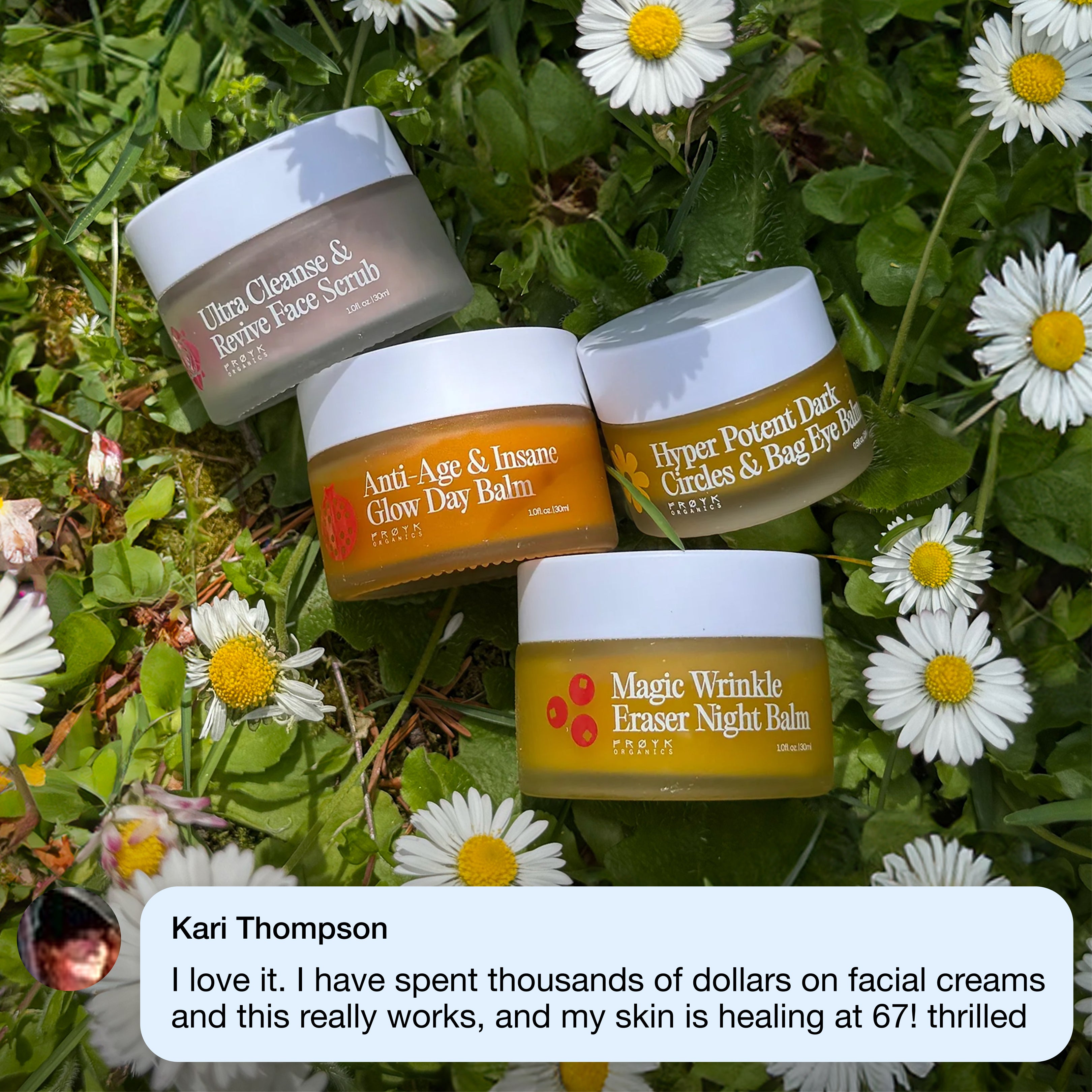
Wenn Sie mit einer Formel beginnen möchten, die bereits auf diesen Prinzipien aufbaut: Die Frøya Organics Collection ist speziell für postmenopausale Haut entwickelt, wasserfrei und konzentriert, mit Sanddorn und botanischen Ölen als Grundlage.
Zur Kollektion