 Account



Sanddornöl für die Haut ist eines der verbindungsreichsten pflanzlichen Öle in der Clean-Beauty-Kosmetik. Sanddornfruchtöl wird kaltgepresst, um maximale Wirksamkeit zu bewahren und die Fülle der Pflanzenstoffe in jeder reinen orangefarbenen Frucht zu erhalten. Das Öl wird sowohl aus Frucht als auch aus Samen extrahiert und ist eine Quelle für Vitamin C und Vitamin E.
Hippophae rhamnoides gedeiht unter arktischen Bedingungen, wo UV-Strahlung, extreme Kälte und nährstoffarme Böden die Pflanze dazu zwingen, schützende Verbindungen zu konzentrieren. Dieselben Verbindungen helfen, Ihre Haut vor oxidativem Stress, Barriereabbau und entzündlichen Schäden zu schützen.
Wir sind Frøya Organics, und Sanddorn ist der Hauptwirkstoff in unserem wasserfreien Balsam. Wir haben die klinischen Daten überprüft, einschließlich topischer Studien zur Barrierefunktion, und einen Wirkstoff gefunden, der sich seinen Platz durch Daten verdient hat. Hier sind neun Mechanismen, die Sie selbst überprüfen können.
1. Omega-7 ahmt das körpereigene Feuchtigkeitssystem Ihrer Haut nach
Die meisten Pflanzenöle spenden Feuchtigkeit von außen. Das Omega-7 in Sanddorn wirkt anders, denn Ihre Haut stellt es bereits selbst her.
Palmitoleinsäure (Omega-7) ist ein natürlicher Bestandteil des menschlichen Talgs. Ihre Haut stellt es selbst als Teil ihrer eigenen Lipidbarriere her. Ab etwa 30 Jahren beginnt die Talgproduktion nachzulassen, und ab 40 Jahren und darüber hinaus beschleunigt sich dieser Rückgang merklich.
Sanddornöl gleicht aus, was Ihre Biologie verliert, und eine veröffentlichte Analyse der Fettsäurezusammensetzung von Sanddorn bestätigt, dass Palmitoleinsäure der charakteristische Fettstoff des Fruchtöls ist und dort um ein Vielfaches konzentrierter vorkommt als in den meisten anderen Pflanzenölen.
Deshalb fühlt sich Sanddornöl auf Ihrer Haut anders an als Kokos- oder Olivenöl: Es zieht ein, statt nur zu überdecken. Wie Skin Savvy Dermatology festhält, „dringt Omega-7 tief ein, um Feuchtigkeit zu spenden, ohne die Poren zu verstopfen." Der Komedogenitätswert liegt bei 2 auf einer Skala von 0 bis 5 - ein geringes Verstopfungsrisiko, selbst bei Mischhaut.
Während okklusive Öle eine Schicht auf Ihrer Haut bilden, fügt sich Omega-7 in die Lipidmatrix ein, die Ihre Haut bereits nutzt.
2. Tiefenwirksame Feuchtigkeit über den Prostaglandin-Signalweg der GLA
Sie tragen jeden Morgen Feuchtigkeitscreme auf, doch am Mittag spannt Ihre Haut schon wieder. Das Problem ist nicht die aufgetragene Menge: es ist die Eindringtiefe.
Gamma-Linolensäure (GLA), eine der essentiellen Fettsäuren im Sanddornkernöl, wird in Ihren Hautzellen zu Prostaglandinen umgewandelt. Prostaglandine sind Signalmoleküle, die Entzündungen, Zellmembranintegrität und Barrierereparatur auf zellulärer Ebene regulieren. Sie geben den Zellen den Befehl, ihre Membranen zu stärken und die interzelluläre Lipidmatrix abzudichten.
Khan und Akhtars Studie aus dem Jahr 2014 zu einer topischen Sanddornöl-Emulsion bestätigte messbare Verbesserungen der Barrierefunktion bei menschlichen Probandinnen. Die Feuchtigkeit blieb nicht nur an der Oberfläche. Sie veränderte die Struktur, mit der die Haut Wasser speichert, mit anhaltenden Verbesserungen bei Messungen des transepidermalen Wasserverlusts.
Am besten geeignet für: Anhaltend dehydrierte Haut, die nicht auf mehrfaches Auftragen von Seren anspricht. Wenn Ihre Haut jedes Produkt sofort aufsaugt und trotzdem am Nachmittag spannt, adressiert der Prostaglandin-Signalweg der GLA das strukturelle Defizit. Wenn Sie nur leichte Feuchtigkeit an der Oberfläche benötigen, übernimmt Omega-7 (Abschnitt 1) diese Aufgabe hervorragend allein.
3. Drei Kollagen-Signalwege arbeiten gleichzeitig
Neues Kollagen aufzubauen ist nur die halbe Aufgabe. Wenn Sie nicht gleichzeitig die Enzyme blockieren, die es abbauen, füllen Sie einen Eimer mit einem Loch darin. Sanddorn wirkt auf beiden Seiten gleichzeitig, durch drei separate Signalwege.
Signalweg 1: Vitamin C als Synthese-Cofaktor. Vitamin C wird für die Hydroxylierung von Prolin und Lysin benötigt, die biochemischen Schritte, die Kollagenfasern zu stabilen Strukturen vernetzen. Eine begutachtete Analyse ergab, dass Vitamin C das primäre Vitamin in den Sanddornbeeren ist, mit 400 mg pro 100 g in der analysierten Sorte, wobei andere Sorten höhere Werte aufweisen. Das liegt deutlich über den etwa 53 mg in einer vergleichbaren Portion Orange.
Signalweg 2: Beta-Sitosterol stimuliert Fibroblasten. Dieses Pflanzensterol aktiviert direkt die Zellen, die Kollagen und Elastin in Ihrer Dermis produzieren. Fibroblasten sind Ihre Kollagenfabriken, und Beta-Sitosterol hält sie produktiv.
Signalweg 3: Polyphenole hemmen MMP-Enzyme. Matrix-Metalloproteinasen bauen aktiv vorhandenes Kollagen und Elastin ab, und die Polyphenole von Sanddorn blockieren sie. Omega-7 fügt eine vierte Schicht hinzu, indem es den SIRT1-Langlebigkeitspfad aktiviert, um die Kollagensynthese zu fördern und gleichzeitig die entzündliche NF-kB-Signalgebung zu unterdrücken, die den Kollagenabbau beschleunigt.
Nur wenige einzelne Wirkstoffe adressieren alle drei Kollagen-Mechanismen gleichzeitig, was Sanddorn von Einzelpfad-Wirkstoffen unterscheidet.
4. Stärkt Ihre Hautbarriere mit einem vollständigen Omega-Spektrum
Wenn Ihre Haut auf alles reagiert, auf Produkte brennt, die früher problemlos vertragen wurden, Rötungen sich nicht beruhigen, Spannungsgefühl keine Feuchtigkeitscreme löst, ist Ihre Barriere wahrscheinlich beeinträchtigt. Sanddorn ist einer der wenigen botanischen Stoffe, die alle vier Lipidgruppen versorgen, auf die Ihre Barriere angewiesen ist.
Jedes Omega spielt eine bestimmte Rolle. Omega-6 stärkt die interzelluläre Lipidmatrix. Omega-3 beruhigt die entzündliche Signalgebung, die Barriereverbindungen schwächt. Omega-7 integriert sich in die Talgschicht, und Omega-9 erhält die Membranflexibilität, sodass Ihre Barriere geschmeidig statt spröde bleibt.
Khan und Akhtars Forschung von 2014 bestätigte messbare Barriereverbessrungen durch topische Anwendung von Sanddorn. Bei beeinträchtigter Barriere suchen Sie nach Formeln mit Kern- und Fruchtöl, um das vollständige Spektrum zu erfassen. Diese Kombination ist die Grundlage der Frøya Organics Barriere-Reparatur-Kollektion, formuliert für Haut, die leicht reagiert.
5. Bekämpft sichtbare Hautalterung mit klinisch gemessenen Ergebnissen
Jedes Öl verspricht, die Hautlanglebigkeit zu unterstützen. Sanddorn ist eines der wenigen mit einer randomisierten kontrollierten Studie, die genau misst, was sich verändert hat und nach welchem Zeitraum.
Auf Biomarker-Ebene zeigten Teilnehmerinnen erhöhte Katalase (ein antioxidatives Enzym, das Wasserstoffperoxid in Ihren Zellen neutralisiert) und verringerte TNF-Alpha (ein entzündungsförderndes Zytokin, das direkt mit beschleunigter Hautalterung und Kollagenabbau verbunden ist). Diese beiden Veränderungen bedeuten, dass Sanddorn auf Angriff und Verteidigung wirkt: schützende Enzyme fördern und gleichzeitig entzündliche Schäden unterdrücken.
Sanddorn ist unter botanischen Ölen selten, weil es überhaupt klinische Dokumentation hat. Für die topische Anwendung speziell bestätigte Khan und Akhtars Forschung von 2014 zu einer Sanddornöl-Emulsion messbare Barriereverbessrungen bei menschlichen Probandinnen. Wenn Sie das größere Bild verstehen möchten, warum Haut so altert, wie sie es tut, lesen Sie unseren Leitfaden zu warum reife Haut ihren Glanz verliert.
Am besten geeignet für: Frauen, die messbare Hautveränderungen wollen, nicht nur ein angenehmes Hautgefühl. Verpflichten Sie sich zu drei Monaten konsequenter Anwendung, bevor Sie die Ergebnisse bewerten: Das ist der klinische Referenzwert.
6. Hellt Altersflecken auf und gleicht den Hautton aus
Altersflecken und unebener Hautton lassen Sie schneller älter wirken als feine Linien. Die meisten aufhellenden Wirkstoffe, von Hydrochinon bis zu hochkonzentrierten Vitamin-C-Seren, sind mit Reizungen verbunden, die empfindliche reife Haut nicht verträgt.
Der Ansatz ist allmählich aber beständig, und mit der Zeit zeigt sich das als gleichmäßigerer Ton, wiederhergestellte Ausstrahlung und ein gesünderer Glow. Dieser allmähliche-Glow-Ansatz ist genau das, auf dem unser Anti-Aging Tagesbalsam für jugendliches Strahlen aufgebaut ist, formuliert mit Sanddorn und Granatapfel für den Tageseinsatz.
7. Beruhigt Entzündungen und Rötungen an der Quelle
Oberflächlich beruhigende Inhaltsstoffe wie Aloe und Kamille lindern nur vorübergehend und unterbrechen niemals den zugrunde liegenden Entzündungskreislauf. Sanddorn wirkt vorgelagert, auf der Signalgebung, die Rötungen überhaupt erst auslöst.
Omega-7 aktiviert SIRT1, ein Protein, das die entzündliche NF-kB-Signalgebung unterdrückt, einen der Hauptschalter des Körpers für Entzündungen. Es gibt einen guten Grund, warum botanische Entzündungshemmer an Boden gewinnen: eine 2025er Übersicht in Frontiers in Pharmacology kartierte, wie Sanddorn die NF-kB- und MAPK-Signalwege unterdrückt und Mediatoren wie TNF-Alpha in Hautmodellen senkt. Chan et al.'s 2024er Studie fügt einen Datenpunkt für Menschen hinzu: verringertes TNF-Alpha nach 12 Wochen.
Omega-3 aus dem Kernöl hilft auch, indem es mit Arachidonsäure konkurriert, um entzündungsfördernde Prostaglandine zu reduzieren. Das ist am relevantesten für postmenopausale Haut, wo sinkendes Östrogen die Ausgangsentzündung erhöht, die niedriggradige Aktivität, die als „Inflammaging" bekannt ist. Larmos et al.'s Studie von 2014 mit 116 postmenopausalen Frauen ergab, dass Sanddornöl die Schleimhautgesundheit unterstützte.
Bei reaktionsfreudiger Haut wirkt konsequente nächtliche Anwendung besser als gelegentliche starke Dosen. Diese Signalwege benötigen stetige Aktivierung, um die Ausgangslage Ihrer Haut neu einzustellen.
8. Unterstützt Wundheilung und Hauterneuerung
Heiler in der Mongolei und Tibet verwendeten Sanddorn über tausend Jahre lang zur Wundbehandlung. Moderne Forschung zeigt, welche Verbindungen diese Reparatur antreiben.
Der GLA-zu-Prostaglandin-Signalweg aus Abschnitt 2 leitet auch die Heilung, verwaltet die Entzündungsphase und schaltet dann Gewebe in den Reparaturmodus. Vitamin E, einschließlich der gut aufgenommenen Tocotrienole in Sanddorn, schirmt zerbrechliche neue Zellen während der Regenerationsphase vor oxidativen Schäden ab, während Beta-Sitosterol die Fibroblasten aufweckt, die Kollagen im heilenden Gewebe wieder aufbauen.
Das ist nicht nur für echte Wunden relevant. Genesung von Microneedling, Peelings, Laserbehandlungen oder angesammeltem täglichem Schaden lehnt sich auf dieselben Signalwege an, daher schützt stetige Nährung zwischen Behandlungen Ihre Ergebnisse.
Dieser Erneuerungs-Fokus ist das, auf dem unser Revitalisierender Tagesbalsam für natürliches Strahlen aufgebaut ist. Es zeigt auch, wie sich Öle unterscheiden: Hagebutte punktet mit Vitamin A für Zellerneuerung und Narbenverfärbung, Sanddorn mit Omega-7 und der Fähigkeit, mehrere Reparatursignalwege gleichzeitig zu versorgen. Sie ergänzen sich, statt zu konkurrieren.
9. Schützt vor UV-Schäden und Umweltstress
Arktische Beeren tragen einige der dichtesten Carotinoidkonzentrationen im gesamten Pflanzenreich in sich.
Beta-Carotin, Lycopin und Zeaxanthin absorbieren über UV-Wellenlängenbereiche hinweg für breite antioxidative Abdeckung. Sanddornöl kann Umweltschäden bekämpfen, die durch Verschmutzung und UV-Strahlung verursacht werden, und die freien Radikale neutralisieren, die hinter diesen schädlichen Effekten von externen Stressoren stehen. Eine 2018er Studie im Journal Antioxidants fand, dass Sanddornkernöl UV-induzierten oxidativen Stress in laborgewachsenen Hautzellen bremste, teilweise durch Aktivierung der eigenen Nrf2-Antioxidans-Abwehren der Zellen.
Das ist unterstützende antioxidative Unterstützung, niemals ein Sonnenschutz-Ersatz. Frøyas eigene Position ist, dass gemäßigte Sonne in Ordnung ist und das Ziel einfach ist, Sonnenbrände zu vermeiden. Schatten und leichte Kleidung verwalten das meiste, mit einem Mineral-Sonnenschutz für lange Outdoor-Stretches. Diese tägliche antioxidative Abwehr ist der Faden, der durch Frøyas strahlende Hautpflege-Produkte läuft, eine Kollektion, die auf botanischen Stoffen aufgebaut ist, die der Haut helfen, ihren Glanz gegen alltäglichen Umweltstress zu bewahren.
Eine Anmerkung zum Umfang
Sanddorn wird auch für die breitere menschliche Gesundheit untersucht, mit einiger Forschung, die mögliche Verbindungen zu Cholesterin und Krebsprävention erforscht, und dasselbe Öl taucht in Körper- und Haarpflege auf. Dieser Artikel konzentriert sich auf externe Anwendung, wo die Hautevidenz am stärksten ist.
Haftungsausschluss: Sanddornöl ist ein kosmetischer Inhaltsstoff, keine Abhilfe für einen Gesundheitszustand. Es ist nicht dazu bestimmt, einen Zustand zu behandeln, zu heilen oder zu verhindern.
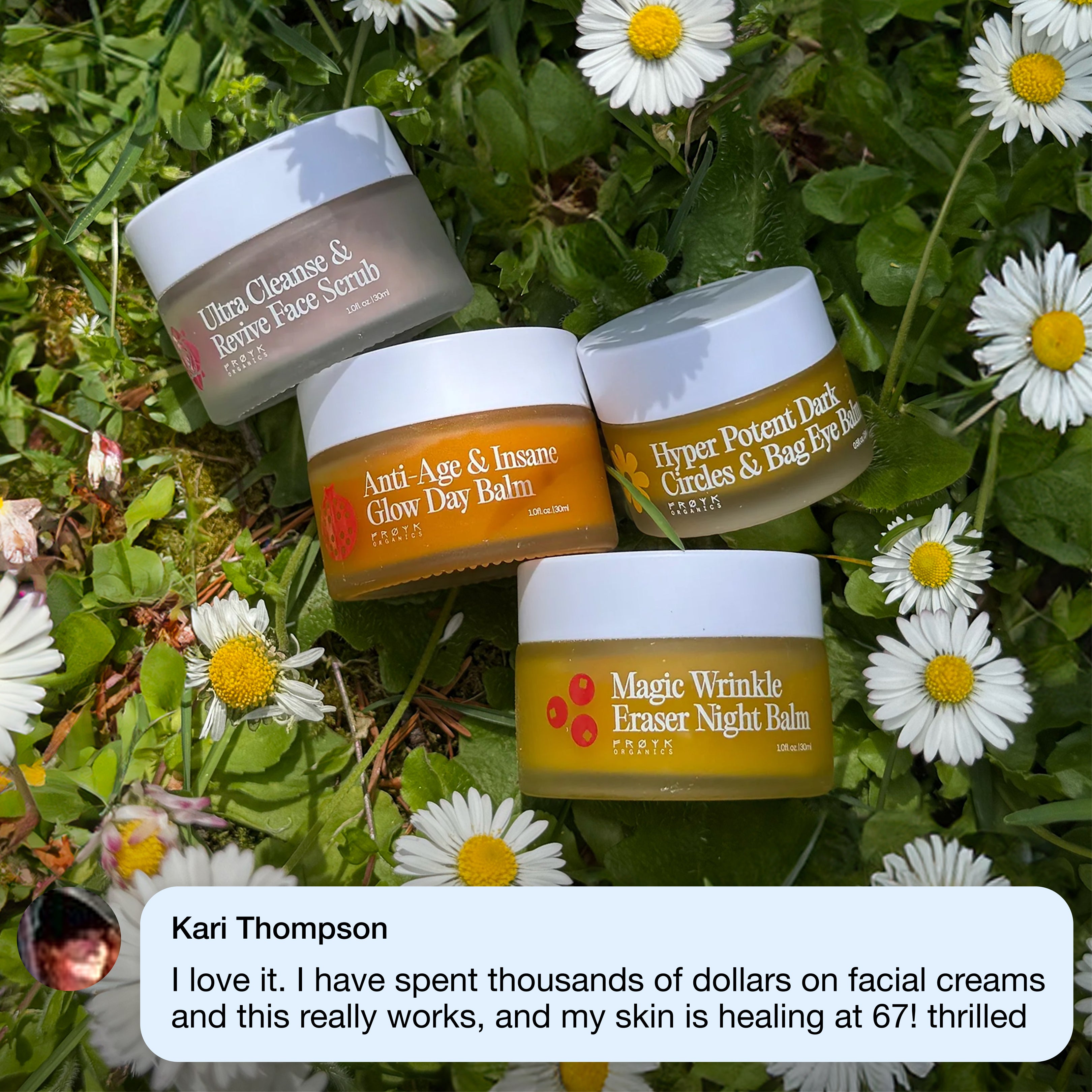
100 % botanische Wirkstoffe. Sanddorn als Grundlage. Null Wasser, null künstliche Konservierungsstoffe. Bewertet mit 4,66/5 aus über 3.152 Bewertungen. 60-Tage-Geld-zurück-Garantie.
Das System entdecken - $119Frequently Asked Questions
Ist Sanddornöl sicher für empfindliche Haut?+
Färbt Sanddornöl die Haut orange an?+
Was ist der Unterschied zwischen Sanddornsamenöl und Fruchtöl?+
Wie schneidet Sanddornöl im Vergleich zu Hagebutte und Arganöl für reife Haut ab?+
Kann Sanddornöl die Poren verstopfen?+
Wie lange dauert es, bis Sie Ergebnisse von Sanddornöl sehen?+