 Account



Sie haben Sanddornöl wahrscheinlich schon in Hautpflegeprodukten gesehen. Aber CO2-Extrakt ist anders – und zwar deutlich. Sanddorn-Extrakt für die Haut liefert eine konzentrierte Version der Wirkstoffe, die beim Kaltpressen entweder verdünnt oder während der Verarbeitung beschädigt werden, und der Unterschied ist besonders bei Haut über 45 entscheidend, bei der bestimmte Lipide und Antioxidantien knapp werden.
CO2-Extrakt vs. kaltgepresstes Öl: Warum die Extraktionsmethode alles verändert
Das Kaltpressen von Sanddornbeeren ergibt ein Öl, das für seinen Carotinoidgehalt geschätzt wird – die Verbindungen, die ihm die charakteristische tiefe Orangefärbung verleihen und für die kräftige antioxidative Wirkung sorgen. Doch Kaltpressen ist ein mechanischer Prozess. Er übt Druck aus und erzeugt dabei Wärme als Nebenprodukt, was hitzeempfindliche Verbindungen abbauen kann. Zudem entsteht dabei ein verdünntes Ergebnis: Das Öl enthält nur die Konzentration an Wirkstoffen, die bereits in der rohen Beere vorhanden war – nicht mehr.
CO2-Extraktion funktioniert anders. Überkritisches Kohlendioxid wird bei niedrigen Temperaturen – typischerweise unter 40 °C – als Lösungsmittel eingesetzt, um bioaktive Verbindungen aus dem Pflanzenmaterial zu lösen. Das CO2 verdampft anschließend vollständig und hinterlässt einen konzentrierten Extrakt ohne Lösungsmittelrückstände. Das Ergebnis ist ein Produkt, das drei- bis zehnmal mehr Carotinoide enthalten kann als kaltgepresstes Sanddornöl aus derselben Beerenquelle.
Das ist deshalb wichtig, weil Carotinoide – insbesondere Beta-Carotin, Lycopin, Zeaxanthin und das seltene, sanddornspezifische Carotinoid Isoxanthophyll – die wichtigsten Antioxidantien sind, die für die klinisch bedeutsamsten Hautwirkungen von Sanddorn verantwortlich sind. Sanddornfruchtfleisch enthält mindestens 41 verschiedene Carotinoid-Typen – eine Vielfalt, an die kein anderes gängig verwendetes Pflanzenöl auch nur annähernd herankommt.
Der CO2-Prozess bewahrt zudem Verbindungen, die beim Kaltpressen verloren gehen oder reduziert werden:
- Gamma-Tocopherol – die Form von Vitamin E, die am wirksamsten stickstoffbasierte freie Radikale neutralisiert, die eine bedeutende Quelle oxidativer Schäden in lichtgealterter Haut darstellen
- Omega-7 (Palmitoleinsäure) – in Konzentrationen von 30–40 % im CO2-Extrakt aus dem Fruchtfleisch, verglichen mit 5–15 % in kaltgepresstem Öl aus dem Samen
- Squalan – ein Lipid, das natürlich im Talg junger Haut vorhanden ist und mit zunehmendem Alter und Östrogenverlust stark abnimmt
- Lupeol – ein Triterpenoid mit nachgewiesener NF-kB-hemmender Wirkung, das heißt, es unterbricht direkt die Entzündungskaskade, die den Kollagenabbau in reifer Haut vorantreibt
Die praktische Konsequenz: CO2-Extrakt wird in Formulierungen mit 1–2 % eingesetzt, während kaltgepresstes Öl typischerweise mit 5–15 % verwendet wird. Sie brauchen weniger davon. Und die Formulierung liefert mehr aktive Wirkstoffe pro Gramm Produkt, das auf Ihre Haut aufgetragen wird.
Warum Omega-7 nach 45 noch wichtiger wird
Omega-7, oder Palmitoleinsäure, ist eine Fettsäure, die den meisten Menschen namentlich nicht geläufig ist. Sie taucht in der allgemeinen Ernährungsdiskussion nicht so auf wie Omega-3 und Omega-6. Doch für die Haut nach den Wechseljahren könnte sie das folgenreichste Lipid in Ihrer Pflegeroutine sein.
Hier ist der Grund: Talg – das natürliche Öl, das Ihre Haut produziert – enthält erhebliche Mengen an Palmitoleinsäure. Sie ist eines der Lipide, die dafür verantwortlich sind, dass die Haut ihre eigene Feuchtigkeitsbarriere regulieren, bakterielle Besiedlung abwehren und die geschmeidige Flexibilität der Hornschicht erhalten kann. Nach den Wechseljahren sinkt die Talgproduktion um etwa 40–50 % (Pappas, 2009, Dermato-Endocrinology). Die Haut verliert damit einen ihrer wichtigsten Selbstreparaturmechanismen.
Topisch aufgetragene Palmitoleinsäure aus Sanddorn-CO2-Extrakt leistet etwas, das die meisten Öle nicht können: Sie integriert sich direkt in die Lipidschichten der Hornschicht, statt als okklusive Barriere oben aufzuliegen. Das ist nicht nur Theorie – die Fettsäure entspricht strukturell den Lipiden, die bereits in der Haut vorhanden sind, und ermöglicht so eine echte Einbindung in die Hautmatrix statt einer oberflächlichen Beschichtung. Das Ergebnis ist eine Barrierereparatur, die aus der eigenen Struktur der Haut heraus entsteht, nicht aus einem Film darauf.
Das erklärt auch, warum Sanddorn-Extrakt besonders wirksam bei der Art von Trockenheit ist, die Feuchtigkeitscremes nicht beheben können. Wenn die Barriere strukturell beeinträchtigt ist und nicht einfach nur dehydriert, behandeln Feuchthaltemittel und okklusive Stoffe das Symptom, nicht die Ursache. Palmitoleinsäure setzt an der Ursache an.
Was die klinische Forschung für reife Haut zeigt
Die klinische Forschungsbasis zu Sanddorn ist stärker als bei den meisten pflanzlichen Wirkstoffen, und die relevantesten Studien für reife Haut konzentrieren sich auf drei Mechanismen: Kollagensynthese, Hemmung von Matrix-Metalloproteinasen und Entzündungsregulierung.
Kollagensynthese über TGF-Beta-1
Eine 2022 in Antioxidants veröffentlichte Studie untersuchte Sanddorn-Proanthocyanidine und ihre Wirkung auf die Fibroblastenaktivität. Dabei zeigte sich, dass Proanthocyanidine aus Sanddorn TGF-beta-1 (Transforming Growth Factor beta-1) hochregulieren – ein zentrales Signalprotein, das Fibroblasten aktiviert, neues Kollagen und Elastin zu bilden. Das ist nicht derselbe Mechanismus wie bei Retinol, das über Retinsäure-Rezeptoren wirkt. Beide Wirkwege können sich ergänzen, was die Grundlage für die später in diesem Artikel besprochene Kombination mit Retinol bildet.
MMP-Hemmung
Hwang IS et al. (2012) zeigten, dass Sanddorn-Extrakt MMP-1 und MMP-9 hemmt – zwei Matrix-Metalloproteinasen, die in lichtgealterter und postmenopausaler Haut chronisch erhöht sind. MMPs bauen bestehendes Kollagen und Elastin ab. Eine chronisch erhöhte MMP-Aktivität ist einer der Gründe, warum reife Haut im Laufe der Zeit dünner wird, selbst ohne weitere Sonnenschäden. Die Hemmung von MMP-1 und MMP-9 verlangsamt im Grunde den strukturellen Kollagenverlust, während gleichzeitig neue Syntheseprozesse angeregt werden.
Beobachtungs- und randomisierte Daten
Eine 12-wöchige Beobachtungsstudie an Frauen im Alter von 45–60 Jahren, die topische Sanddorn-Präparate verwendeten, zeigte verbesserte Elastizitätswerte, geglättete feine Linien um Augen und Mund sowie eine erhöhte Kollagendichte, gemessen mittels Ultraschallbildgebung. Eine 2024 durchgeführte randomisierte kontrollierte Studie von Chan et al. mit einer Formulierung aus Sanddorn-Samenöl fand nach acht Wochen signifikante Verbesserungen des transepidermalen Wasserverlusts (TEWL) im Vergleich zu Placebo und bestätigte damit den barrierestärkenden Mechanismus.
Entzündungshemmende Wirkung über NF-kB
Eine Studie aus dem Jahr 2017 untersuchte die Wirkung von Sanddorn-Extrakt auf die Entzündungswege NF-kB und STAT1. Beide wurden durch bioaktive Sanddorn-Wirkstoffe signifikant gehemmt, wobei Lupeol und die Carotinoid-Fraktion eine besondere Rolle spielten. Das ist klinisch relevant für reaktionsfreudige, zu Rötungen neigende Haut, bei der eine chronische, niedriggradige Entzündungsaktivierung den Kollagenabbau beschleunigt und die Barriereregeneration verzögert.
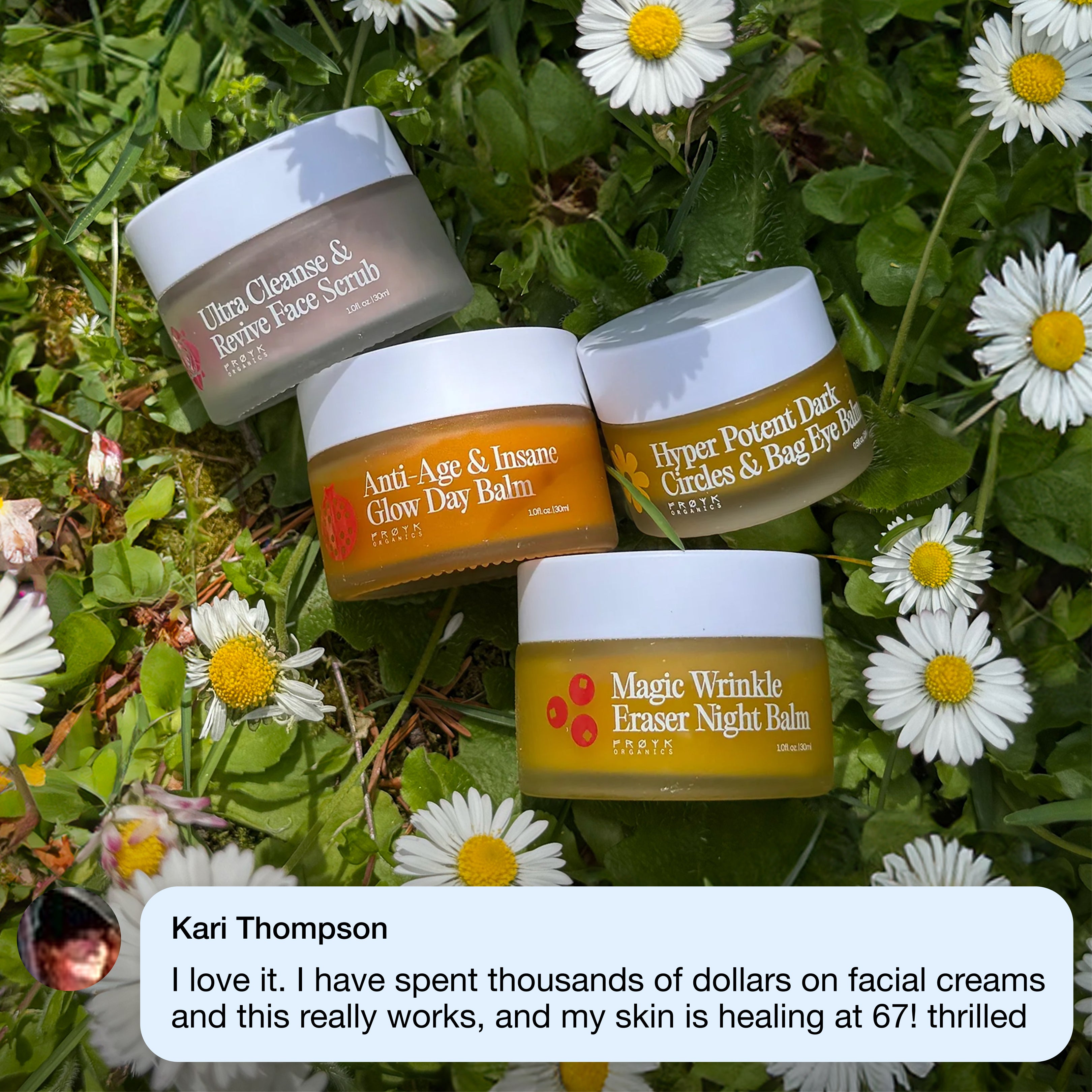
100 % pflanzliche Wirkstoffe. Sanddorn als Grundlage. Null Wasser, keine künstlichen Konservierungsstoffe. Bewertet mit 4,66/5 bei über 3.152 Rezensionen. 60 Tage Geld-zurück-Garantie.
Jetzt das System entdecken – $119So verwenden Sie CO2-Sanddorn-Extrakt, ohne Ihr Kopfkissen zu verfärben
Die orangene Farbe von konzentriertem Sanddorn-Extrakt ist keine Nebensächlichkeit. Es handelt sich um eine wichtige, praktisch relevante Eigenschaft. Hier erfahren Sie, was Sie wissen müssen, um ihn zu verwenden, ohne Stoff zu ruinieren oder sich selbst zu ärgern.
Konzentration und Dosierung
CO2-Extrakt sollte in fertigen Formulierungen mit 1–2 % eingesetzt werden. Wenn Sie mit einem reinen Extrakt arbeiten (nicht vorverdünnt), sind zwei Tropfen, gemischt in Ihre gewöhnliche Gesichtscreme oder Ihr Serum vor dem Auftragen, ein vernünftiger Ausgangspunkt. Die Wirkstärke des Extrakts bedeutet: Mehr ist nicht besser – mehr als 2 % verbessern das Ergebnis nicht und erhöhen das Risiko vorübergehender Hautverfärbungen sowie von Stoffflecken.
Temperaturempfindlichkeit
Die bioaktiven Verbindungen im CO2-Extrakt, insbesondere die Carotinoide, bauen sich oberhalb von 40 °C ab. Geben Sie den Extrakt nicht zu Produkten, die erwärmt werden, tragen Sie ihn nicht in der Nähe von Dampf auf, und lagern Sie Ihren Extrakt an einem kühlen, dunklen Ort (ein Badezimmerschrank abseits der Dusche ist in Ordnung; neben einem Heizkörper nicht).
Platzierung in der Abendroutine
Tragen Sie Sanddorn-Extrakt in Ihrer Abendroutine auf, nach der Reinigung und wasserbasierten Seren, aber vor Ihrem Gesichtsöl oder einer schwereren Feuchtigkeitscreme. Das orangefarbene Pigment wird innerhalb von 10–20 Minuten vollständig von der Haut aufgenommen; es sollte nicht auf Ihr Kopfkissen übertragen werden, wenn Sie dieses Zeitfenster zum Einziehen abwarten, bevor Sie sich hinlegen. Verwenden Sie einen dunklen Kissenbezug, während Sie Ihre Verträglichkeit testen – tiefe orangefarbene Pigmentflecken auf Stoff sind dauerhaft.
Lagerung
CO2-Extrakt ist lagerstabiler als kaltgepresstes Öl, da der Extraktionsprozess Wasser entfernt und das Risiko mikrobieller Kontamination verringert. Lagern Sie ihn in dunklem Glas (bernsteinfarben oder violett), fern von Wärme und direktem Licht. Die Haltbarkeit eines ungeöffneten Extrakts beträgt in der Regel 18–24 Monate; nach dem Öffnen bei richtiger Lagerung 12 Monate.
Sanddorn-Extrakt und Retinol: Eine klügere Kombination für empfindliche Haut
Retinol ist der klinisch am besten belegte topische Anti-Aging-Wirkstoff, der ohne Rezept erhältlich ist. Sanddorn-CO2-Extrakt ist kein Ersatz für Retinol. Vielmehr ist er ein kompatibler Begleiter, der einen der größten Nachteile von Retinol angeht: die Barrierestörung und Reizung, wegen der viele Frauen über 45 Retinol aufgeben, bevor sie Ergebnisse sehen.
Retinol beschleunigt die Zellerneuerung und regt Fibroblasten über Retinsäure-Rezeptoren an. Dieser Prozess beeinträchtigt die Barrierefunktion vorübergehend, da die Haut schneller erneuert wird, als ihre Reparaturmechanismen Schritt halten können. Bei Haut, die bereits mit postmenopausaler Barriereverdünnung zu kämpfen hat, reicht diese Störung oft aus, um Rötungen, Schuppung und Empfindlichkeit auszulösen, die die weitere Anwendung unmöglich erscheinen lassen.
Das Omega-7 aus Sanddorn-Extrakt liefert genau das Lipidsubstrat, das die Barriere benötigt, um sich während der Retinol-Anwendung selbst zu reparieren. Seine Carotinoid-Fraktion bietet antioxidativen Schutz, der oxidativen Stress während der von Retinol angetriebenen beschleunigten Zellerneuerung reduziert. Und seine NF-kB-hemmende Wirkung kann die Entzündungsreaktion mäßigen, die Retinol bei reaktionsfreudiger Haut manchmal auslöst.
Die Reihenfolge ist entscheidend. Retinol sollte direkt auf leicht feuchte Haut aufgetragen, einziehen gelassen und anschließend mit Sanddorn-Extrakt versiegelt und geschützt werden. Mischen Sie die beiden nicht in derselben Anwendung – der lipidreiche Extrakt würde die Hautdurchdringung von Retinol verringern, wenn er gleichzeitig aufgetragen wird.
Wie Sie einen hochwertigen CO2-Sanddorn-Extrakt auswählen
Die Qualitätsunterschiede zwischen den am Markt erhältlichen Sanddorn-Extrakten sind erheblich. Hier erfahren Sie, worauf Sie achten sollten – und was Sie vermeiden sollten.
Fruchtfleisch- vs. Samenextrakt
Aus Sanddorn werden zwei kommerziell erhältliche Öle und Extrakte gewonnen: eines aus dem Fruchtfleisch und eines aus dem Samen. Sie unterscheiden sich ernährungsphysiologisch deutlich. Fruchtfleisch-Extrakt ist deutlich reicher an Carotinoiden und Omega-7. Samenextrakt ist reicher an Omega-3 und Omega-6. Für die Barrierereparatur reifer Haut und antioxidative Zwecke ist CO2-Extrakt aus dem Fruchtfleisch das richtige Produkt. Wenn bei Ihrem Produkt nicht angegeben ist, ob es sich um Fruchtfleisch- oder Samenextrakt handelt, fragen Sie den Anbieter oder gehen Sie davon aus, dass es sich um Samenextrakt handelt.
Geografische Herkunft
Wildgesammelter nordischer oder sibirischer Sanddorn (Hippophae rhamnoides), der in Höhenlagen mit hoher UV-Einstrahlung wächst, zeigt durchgängig höhere Carotinoid-Konzentrationen als kultivierte Sorten aus niedrigeren Breitengraden. Das ist eine Stressreaktion – die Pflanze produziert unter rauen Wachstumsbedingungen mehr schützende Antioxidantien. Achten Sie auf Anbieter, die wildgesammelten Sanddorn angeben und Informationen zur geografischen Herkunft bereitstellen.
Qualitätsmerkmale
- Das Etikett oder die Produktspezifikation sollte CO2-Extraktion angeben (nicht kaltgepresst, nicht lösungsmittelextrahiert)
- Fordern Sie das Analysezertifikat (CoA) an oder prüfen Sie es auf den Palmitoleinsäuregehalt – ein hochwertiger CO2-Extrakt aus dem Fruchtfleisch sollte mehr als 25 % Palmitoleinsäure aufweisen
- Die Farbe ist ein verlässlicher visueller Indikator: Ein hochwertiger CO2-Extrakt aus dem Fruchtfleisch sollte tief, kräftig orange sein – fast rot-orange. Ein blasses Gelb oder helles Orange deutet auf einen niedrigen Carotinoidgehalt hin
- Die Verpackung sollte aus dunklem Glas bestehen (bernsteinfarben oder violett). Durchsichtige Kunststoffverpackungen sind nicht geeignet, um die Carotinoid-Wirksamkeit über die Haltbarkeitsdauer des Produkts zu erhalten
Was Sie erwarten können: Zeitlicher Ablauf und realistische Ergebnisse
Sanddorn-CO2-Extrakt ist keine Über-Nacht-Behandlung. Die Mechanismen, über die er wirkt – Einbindung von Barrierelipiden, gesteigerte Kollagensynthese, MMP-Hemmung – sind biologische Prozesse, die Wochen bis Monate benötigen, um sichtbare Ergebnisse zu erzielen. Realistische Erwartungen zu haben verhindert, dass Sie ein Protokoll vorzeitig abbrechen, das tatsächlich wirkt.
Woche 1–2
Die ersten Veränderungen sind eher spürbar als sichtbar. Die Haut fühlt sich nach der Reinigung weicher und weniger straff gespannt an. Wenn Sie das straffe, papierartige Gefühl kennen, das auf eine unzureichende Barriere hinweist, verbessert sich dies in der Regel innerhalb der ersten zwei Wochen konsequenter Anwendung. Das spiegelt wider, dass Omega-7 beginnt, sich in die Lipidmatrix der Hornschicht einzubinden.
Woche 4–6
Die Barrierefunktion verbessert sich messbar. Wenn Sie mit einem TEWL-Messgerät arbeiten, sollten die Werte sinken. Optisch kann die Haut strahlender wirken – der Carotinoidgehalt verleiht dem Hautton eine dezente Wärme, die sich von der vorübergehenden Verfärbung unmittelbar nach dem Auftragen unterscheidet. Reaktive Rötungen und Empfindlichkeit können sich in diesem Zeitraum zu bessern beginnen, da sich die NF-kB-hemmenden Effekte summieren.
Woche 8–12
In diesem Zeitfenster zeigen klinische Studien ihre bedeutsamsten Ergebnisse: messbare Verbesserungen der Elastizität, sichtbar geglättete feine Linien (besonders im Augenbereich) und durch Bildgebung bestätigte Zunahmen der Kollagendichte. Das sind keine subtilen Veränderungen – die 12-wöchigen Studien an Frauen im Alter von 45–60 Jahren zeigten statistisch signifikante und klinisch bedeutsame Ergebnisse.
Geduld ist gefragt. Die Haut, die Sie reparieren, hat Jahre gebraucht, um in ihren aktuellen Zustand zu gelangen. Zwölf Wochen sind, gemessen an der zugrunde liegenden Biologie, ein kurzes Interventionsfenster.