 Account


Ein Spannungsgefühl nach der Reinigung, das keine Creme beruhigen kann. Das Serum, das Sie seit fünf Jahren verwenden, brennt plötzlich. Schuppen, die sich um 10 Uhr morgens im Concealer sammeln. Eine Rötung auf den Wangen, die wie Windbrand aussieht – in einem beheizten Raum, im April.
„Warum ist meine Haut plötzlich so trocken? Sie saugt jede Creme auf und fühlt sich trotzdem ausgetrocknet an.“
Das ist keine empfindliche Haut. Das ist eine geschädigte Hautbarriere. Wenn Sie über 40 sind, liegt die Ursache wahrscheinlich nicht dort, wo Sie sie vermuten.
Die versteckte Variable ist Östrogen. Mit seinem Rückgang verändert sich die Lipidmatrix Ihres Stratum corneum. Die Ceramidproduktion sinkt. Die Fettsäureketten werden kürzer. Ihre Barriere verändert sich strukturell – sie ist nicht bloß vorübergehend gereizt (Scientific Reports, 2022). Deshalb brennt die Routine, die mit 35 funktioniert hat, plötzlich mit 48. Die meisten Artikel zur Barriere-Reparatur übersehen genau das. Dieser hier nicht.
In sieben Schritten diagnostizieren Sie, was gerade passiert, verstehen, warum die Perimenopause die Regeln ändert, führen ein sauberes Reset durch, wählen die Öle, die die Ceramidsynthese fördern (und die, die sie sabotieren), bauen eine wiederaufgebaute Routine auf, versorgen die Barriere von innen und wissen genau, wann Sie Aktivstoffe wieder einführen können. Natürliche Reparatur der Hautbarriere – botanisch, in der richtigen Reihenfolge und wissenschaftlich fundiert.
Schritt 1: Diagnostizieren Sie, was mit Ihrer Haut wirklich nicht stimmt
Drei Zustände fühlen sich an einem Dienstagmorgen fast identisch an und verlangen genau entgegengesetzte Behandlungen. Barriereschaden, empfindliche Haut oder Purging. Deuten Sie das Signal falsch, behandeln Sie wochenlang das Falsche.
Vier Anzeichen weisen eindeutig auf eine geschädigte Hautbarriere hin.
Spannungsgefühl, das sich mit Feuchtigkeitscreme nicht löst. Das ist ein über den Ausgangswert erhöhter transepidermaler Wasserverlust (TEWL). Ein normaler TEWL liegt unter 10 g/m²/h. Geschädigte Haut liegt 2- bis 3-mal höher. Die Feuchtigkeitscreme bleibt oben liegen, weil die Matrix darunter kein Wasser mehr halten kann.
Brennen bei Produkten, die Sie monatelang problemlos verwendet haben. Neu auftretende Reaktivität ist das Erkennungszeichen. Eine Person mit von Natur aus empfindlicher Haut reagiert immer auf Duftstoffe. Eine Person mit geschädigter Barriere reagiert plötzlich auf Dinge, die letzte Saison noch unproblematisch waren.
Schuppung in Flecken, nicht flächendeckende Trockenheit. Echte Dehydrierung wirkt diffus. Fleckige Schuppung spiegelt Mikrorisse in der ziegelsteinartigen Lipidmatrix wider, wo die Tight Junctions in bestimmten Zonen versagt haben.
Rötung, die anhält und sich ausbreitet. Sobald die Tight Junctions gestört sind, breitet sich eine entzündliche Kaskade nach außen aus. Wenn sich Ihre Wangen früher innerhalb von zehn Minuten beruhigten und jetzt zwei Stunden lang rot bleiben, ist die Kaskade aktiv.
Barriereschaden versus Purging: Purging tritt nur in Ihren üblichen Unreinheitszonen auf, folgt dem Zellerneuerungszyklus (4 bis 6 Wochen) und klingt ab. Ein Barriereschaden tritt in neuen Bereichen auf, verschlimmert sich bei fortgesetzter Produktnutzung und breitet sich aus. Neues Terrain bedeutet Barriereschaden.
Ein Test für zu Hause als Näherung für TEWL: Tragen Sie klares Wasser auf gereinigte Haut auf. Trocknet es schnell und hinterlässt ein Spannungsgefühl im Gesicht, verliert Ihre Barriere Wasser, das sie eigentlich halten sollte.
Schritt 2: Verstehen Sie den Perimenopause-Faktor, von dem Ihnen niemand erzählt hat
Die Risse sind nicht metaphorisch gemeint. Sie sind strukturell.
„Nach 40 bedeutet sinkendes Östrogen, dass Ihre Haut weniger von den essenziellen Fetten und Ölen produziert, die sie braucht. Das erzeugt winzige, unsichtbare Risse in Ihrem Schutzschild.“
Östrogen leistete jahrzehntelang eine stille, tragende Arbeit. Es regte die Ceramidsynthese über das SPT-Enzym (Serin-Palmitoyltransferase) an. Es unterstützte längere Sphingoid-Basiskettenlängen – die langkettigen Lipidmoleküle, die der Barriere ihre Integrität verleihen. Es trieb die Produktion von Hyaluronsäure an. Es hielt die epidermale Zellerneuerung zügig.
Die Scientific-Reports-Studie von 2022 machte diesen Wandel messbar. Menopausale Haut zeigte reduzierte Ceramidwerte im Stratum corneum und kürzere durchschnittliche Ceramid-Kettenlängen. HRT verhinderte jede einzelne dieser Veränderungen. Die Lipid-„Ziegel“ in Ihrer Barriere sind weniger an der Zahl und kürzer in der Länge. Stellen Sie sich eine Ziegelmauer vor, die aus halben Ziegeln gebaut ist: gleiche Fläche, aber dramatisch geringere strukturelle Stabilität.
So sieht das im Spiegel aus: Produkte werden anders aufgenommen, weil Ihre Epidermis dünner ist und das Eindringen von Reizstoffen erleichtert wird. Zuvor unbedenkliche Aktivstoffe brennen. Feuchtigkeitscreme „bringt nichts“, weil die Matrix darunter kein Wasser mehr halten kann. Rötungen konzentrieren sich in Zonen mit hoher Östrogenrezeptordichte, den Wangen und dem Bereich um den Mund.
Wenn der TEWL hoch ist, verliert die Barriere nicht nur nach außen Wasser – sie lässt auch Reizstoffe schneller und tiefer nach innen eindringen, als Ihre Haut es verkraften kann. Alkohol, Duftstoffe und hochkonzentrierte Aktivstoffe erreichen lebendes Gewebe, bevor das Stratum corneum die Chance hat, sie abzupuffern. Deshalb fühlt sich das Brennen so unverhältnismäßig zur Produktstärke an. Nicht das Produkt ist aggressiver geworden – Ihre Barriere ist durchlässiger geworden.
Dr. Dray beschreibt es unverblümt: „Mit dem Rückgang des Östrogens haben Sie weniger Hyaluronsäure in den tieferen Hautschichten, um Wasser zu binden. Sie haben eine schwächere Hautbarriere. Ihre Epidermis ist dünner.“
Schritt 3: Führen Sie das Barriere-Reset durch (Stoppen, Vereinfachen, Stabilisieren)
Weniger zu tun ist die Maßnahme. „Bevor Sie zu einem weiteren Produkt greifen, treten Sie einen Schritt zurück und fragen sich: Warum wurde meine Hautbarriere überhaupt beeinträchtigt? Belasten Sie Ihre bereits strapazierte Barriere nicht mit neuen Seren.“ Dr. Drays Rat ist das Rückgrat jedes erfolgreichen Resets. Dr. Idriss ergänzt: „Wir haben es übertrieben und uns die Gesichter verbrannt. Mit dem richtigen Reset bekommen Sie Ihre Haut innerhalb von 1 bis 2 Wochen wieder auf Kurs.“
Zu etwas Neuem zu greifen macht es meist nur schlimmer.
Die Stopp-Liste, für 7 bis 10 Tage:
- Alle Säuren (AHA, BHA, PHA, Mandelsäure, Azelainsäure)
- Retinoide jeder Stärke oder Form
- Vitamin C in L-Ascorbinsäure-Form über 10%
- Mechanische Peelings, einschließlich Waschlappen und Musselintüchern
- Duftstoffe, synthetisch oder ätherisch
- Jedes neue Produkt, das in den letzten 30 Tagen hinzugekommen ist
Sie pausieren, Sie geben nicht auf. Die Produkte sind nicht der Feind. Das Timing ist es.
Die Reset-Routine besteht aus drei Produkten:
- Creme- oder ölbasierter Reiniger, lauwarmes Wasser, einmal täglich (zweimal nur, wenn Sie SPF oder Make-up getragen haben)
- Barriere-Feuchtigkeitscreme auf feuchter Haut, innerhalb von 60 Sekunden nach der Reinigung
- Mineralischer SPF am Morgen
Die kostenlosen Maßnahmen leisten genauso viel wie die Produkte. Nur lauwarme Duschen, denn Hitze entzieht Lipide. Cremen Sie sich innerhalb von 60 Sekunden nach jedem Wasserkontakt ein. Betreiben Sie nachts einen Luftbefeuchter, wenn Ihre Raumluft unter 40% relative Luftfeuchtigkeit liegt. Hören Sie auf, gereizte Stellen anzufassen und zu kontrollieren. Ihre Finger übertragen entzündliche Signale, die Ihre Haut nicht braucht.
Schritt 4: Wählen Sie die richtigen natürlichen Öle (Linolsäure schlägt Ölsäure)
Das Internet hat Ihnen gesagt: „Öle sind natürlich und sicher.“ Bei einer geschädigten, reifen Barriere ist das eine unvollständige Information. Das Fettsäureprofil des Öls entscheidet, ob es die Matrix repariert oder auflöst.
Linolsäure schlägt Ölsäure. Linolsäure (Omega-6) ist eine direkte Vorstufe von Ceramid 1, dem Schlüssel-Ceramid des Stratum corneum. Ihre unterproduzierende, perimenopausale Barriere ist von Natur aus arm an Linolsäure. Linolsäurereiche Öle versorgen genau den Stoffwechselweg, der zu kurz kommt.
Ölsäure (Omega-9) ist ein größeres Molekül, das die geordnete Lipidpackung stört. In ölsäuredominanten Ölen kann sie auf empfindlicher oder geschädigter Haut den TEWL erhöhen. Auf einer gesunden, jungen Barriere verursachen ölsäuredominante Öle keine Probleme. Auf einer perimenopausalen Barriere in der Reparaturphase verzögern sie die Arbeit.
- Hagebuttenkernöl — 48–54% Linolsäure, Ceramid-1-Vorstufe
- Sanddornkernöl — Linolsäure + seltenes Omega-7
- Squalan — biomimetisch zum Talg, nahezu kein Reizrisiko
- Kokosöl — ~50% ölsäuredominante gesättigte Fette, komedogen
- Olivenöl — ~70% Ölsäure, bei Barriereschäden im Gesicht meiden
- Süßmandelöl — mäßig ölsäurehaltig; nach der Heilung vorsichtig wieder einführen
Sanddorn verdient einen eigenen Absatz. Es ist die einzige gängig erhältliche pflanzliche Quelle für Omega-7 (Palmitoleinsäure), die die Palmitoleinsäure im menschlichen Talg widerspiegelt. Der Palmitoleinsäuregehalt des Talgs sinkt mit dem Alter. Eine Doppelblindstudie zeigte, dass 500 mg Omega-7 täglich über 12 Wochen die Feuchtigkeit verbesserten und den TEWL senkten. Äußerlich gibt Sanddorn einer reifen Barriere etwas strukturell Vertrautes zurück.
Die Aufgabe der Hagebutte ist eine andere. Ihr Linolsäuregehalt von 48 bis 54% versorgt die Ceramid-1-Synthese über den direkten Vorstufenweg. Ihre natürlichen Spuren von Trans-Retinsäure sorgen für eine sanfte Zellerneuerung, ohne die Reizkurve von pharmazeutischem Retinol. Hagebuttenöl oxidiert schnell, kaufen Sie also kleine Flaschen, lagern Sie es kühl und verbrauchen Sie es innerhalb von 6 Monaten nach dem Öffnen.
Schritt 5: Bauen Sie die natürliche Wiederaufbau-Routine auf (Morgens und Abends)
Das Lipidverhältnis, das die meisten Barriere-Artikel nie nennen. Das Stratum corneum besteht zu etwa 50% aus Ceramiden, 25% aus Cholesterin, 15% aus freien Fettsäuren. Bei gealterter Haut zeigt die Forschung, dass ein cholesterindominantes Verhältnis von 3:1:1 die Reparatur beschleunigt. Einzelwirkstoff-„Ceramidcremes“ zeigen bei reifer Haut schlechtere Ergebnisse, weil die Barriere eine Matrix ist, kein Monolith.
- Sanfter Cremereiniger, oder nur Wasser, falls die Haut noch reaktiv ist.
- Feuchtigkeitsspendendes Mist oder Essenz auf feuchter Haut.
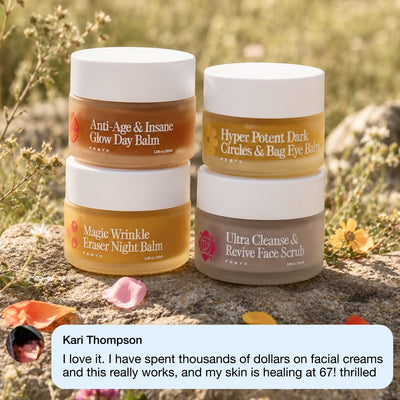
- Morgenserum mit Sanddorn als Hauptwirkstoff. Das Omega-7 bringt die Talg-Mimikry. Die Linolsäure unterstützt die Versorgung mit Ceramid-Vorstufen. Das Frøya Sanddorn-Morgenserum passt hier genau hinein.
- Tagesbalsam mit Squalan, Hafer und Ringelblume. Squalan übernimmt die Okklusion. Die Avenanthramide des Hafers hemmen die NF-κB-Entzündung schon bei Konzentrationen ab 1 ppb und besitzen den FDA-Status eines Hautschutzmittels. Ringelblume reduziert MMP-2, MMP-9, TNF-alpha und IL-6 und fördert gleichzeitig die Fibroblastenproliferation. Der Frøya Anti-Age Day Balm vereint diese drei.
- Mineralischer SPF obendrauf. Während des Wiederaufbaus nicht verhandelbar, denn neue Zellen im Stratum corneum sind lichtempfindlich.
Die Reihenfolge ist nicht ästhetisch, sondern pharmakokinetisch begründet. Das Auftragen des Sanddornserums auf feuchte Haut vor dem Tagesbalsam erzeugt einen Lipid-Schichteffekt: Die Linolsäure des Serums dringt zuerst in das feuchte Stratum corneum ein und erreicht dort den Vorstufenweg, wo sie gebraucht wird. Danach versiegelt das okklusive Squalan des Balsams die Oberfläche, hält Wasser drinnen und schließt die frisch aufgetragenen Fettsäuren in der Matrix ein, statt sie an der Oberfläche verdunsten zu lassen. Kehren Sie die Reihenfolge um, halbieren Sie den Effekt.

Hagebutte und Ringelblume als Wirkstoffbasis. Versorgt die Ceramid-1-Synthese über Nacht, während der aktivsten Reparaturphase der Barriere.
Night Balm shoppen- Öl- oder cremebasierter Reiniger, lauwarmes Wasser.
- Feuchtigkeitsspendendes Mist oder Essenz auf feuchte Haut aufdrücken.
- Night Balm mit Hagebutte und Ringelblume. Die Nacht ist das Lipid-Reparaturfenster, in dem der TEWL seinen Höhepunkt erreicht und die Lipidsynthese am empfänglichsten ist. Die Linolsäure der Hagebutte versorgt direkt die Ceramid-1-Produktion. Der Magic Wrinkle Eraser Night Balm findet hier ganz natürlich seinen Platz.
- Optional an reaktiven Abenden: ein einzelner Tropfen reines Sanddornkernöl, sanft über den Balsam gedrückt.
Das besondere Zeitfenster besteht darin, dass der TEWL über Nacht von Natur aus höher ist als tagsüber, wobei Studien zeigen, dass der nächtliche TEWL zwischen 1 und 4 Uhr morgens seinen Höhepunkt erreicht. Das Auftragen des Hagebuttenbalsams vor dem Schlafengehen bedeutet, dass die Lipide genau dann vorhanden sind, wenn die Barriere am durchlässigsten ist und ihre Lipidmatrix am aktivsten erneuert. Sie versorgen den Reparaturprozess während seiner geschäftigsten Schicht.
Die Anwendung zählt fast genauso viel wie die Inhaltsstoffe. Tragen Sie das Produkt innerhalb von 60 Sekunden nach Wasserkontakt auf feuchte Haut auf. Wärmen Sie das Produkt zwischen kühlen Händen an. Drücken Sie es ein, reiben Sie nicht. Reife Haut ist dünner; Reibung ist ein unnötiger Stressfaktor.
Schritt 6: Versorgen Sie die Barriere von innen (Ernährung, Cortisol, Schlaf)
Sie können das perfekte Produkt perfekt anwenden und trotzdem stagnieren. Wenn die interne Lipidsynthese unterdrückt ist, öffnet die Fabrik nie wieder vollständig.
Cortisol ist die am meisten unterschätzte Variable. Eine JAAD-Studie zu Glukokortikoiden zeigte, dass erhöhtes Cortisol über das Enzym 11-Beta-HSD1 gleichzeitig die epidermale Synthese von Ceramiden, Cholesterin und Fettsäuren hemmt. Eine gestresste Barriere ist dreifach defizitär. Die topische Reparatur stockt, wenn Cortisol chronisch erhöht bleibt.
Praktische Gegenmaßnahmen: kühlere Duschen (die selbst das Cortisol senken), Magnesiumglycinat am Abend, 10 Minuten Morgensonne im Gesicht, um den zirkadianen Cortisolrhythmus zu verankern, und kein Handy in den ersten 30 Minuten nach dem Aufwachen. Letzteres klingt in der Theorie kleiner, als es sich in der Praxis auswirkt.
Vitamin D. Ein niedriger Vitamin-D-Spiegel korreliert mit einer beeinträchtigten Barrierefunktion. Reife Frauen sind überproportional häufig unterversorgt, aufgrund geringerer Sonnenexposition und der verminderten Fähigkeit dünnerer Haut, Vitamin D zu synthetisieren. Bitten Sie Ihren Arzt um einen 25-OH-Vitamin-D-Bluttest. Zielwert: 40 bis 60 ng/mL.
Zink. Ein Cofaktor für die Fettsäure-Desaturase und mehrere Barriere-Enzyme. 15 bis 25 mg täglich zu einer Mahlzeit. Niemals auf nüchternen Magen.
Schlaf ist die Nachtschicht der Barriere. Cortisol erreicht während des Tiefschlafs seinen niedrigsten Wert. Die Lipidsynthese läuft auf Hochtouren. 7 bis 8 Stunden durchgehender Schlaf sind eine Hautpflegemaßnahme, kein Luxus. Dimmen Sie das Licht nach Sonnenuntergang, halten Sie das Schlafzimmer kühl, schalten Sie Bildschirme 60 Minuten vor dem Zubettgehen aus. Nächtliche Schweißausbrüche in der Perimenopause stören dieses Zeitfenster indirekt — einer von mehreren Gründen, warum die Barriere-Reparatur nach 45 länger dauert. Arbeiten Sie damit: feuchtigkeitsableitende Bettwäsche, ein Ventilator, Magnesium vor dem Schlafengehen.
Schritt 7: Erkennen Sie, wann Sie geheilt sind, und wie Sie Aktivstoffe wieder einführen
Der Unterschied zwischen Frauen, die geheilt bleiben, und Frauen, die innerhalb von drei Wochen einen Rückfall erleiden, ist das Protokoll zur Wiedereinführung.
Vier Anzeichen, dass Sie geheilt sind:
- 1Keine neue Reaktivität auf die Wiederaufbau-Routine über 14 aufeinanderfolgende Tage.
- 2Lauwarmes Wasser auf bloßer Haut verursacht kein Brennen.
- 3Die Haut wirkt innerhalb von 10 Minuten nach der Feuchtigkeitscreme frisch und wird nach 30 Minuten nicht wieder trocken.
- 4Rötungszonen sind zu Ihrem persönlichen Ausgangswert zurückgekehrt.
Wenn auch nur eines davon „Nein“ lautet, verlängern Sie den Wiederaufbau um 2 Wochen. Verhandeln Sie hier nicht.
Die Regel „eins rein, zwei Wochen warten“. Führen Sie jeweils nur einen Aktivstoff ein. Warten Sie 14 volle Tage, bevor Sie den nächsten hinzufügen. Die langsamere Zellerneuerung reifer Haut bedeutet, dass Reaktionen später auftreten können als mit 30. Was an Tag 3 verträglich wirkt, kann an Tag 10 immer noch aufflammen.
Worauf Sie während dieser 14 Tage eigentlich achten sollten, ist nicht die dramatische Reaktion. Worauf Sie achten sollten, ist der schleichende Aufbau: ein sich einschleichendes Spannungsgefühl, das um Tag 8 herum auftritt, eine Rötung, die länger braucht, um abzuklingen, als in der Woche zuvor, eine Texturveränderung in einer bestimmten Zone. Das sind die leisen Signale dafür, dass der zuletzt eingeführte Aktivstoff zu stark, zu früh wirkt — und sie sind leicht zu übersehen, wenn Sie nur nach offensichtlicher Rötung Ausschau halten.
- Niacinamid 4 bis 5% — unterstützt die Ceramidsynthese selbst; der sicherste Wiedereinstieg
- Vitamin C in sanfter Form — Magnesium-Ascorbylphosphat oder Natrium-Ascorbylphosphat; nicht 20% L-Ascorbinsäure
- Hydroxysäuren in niedriger Konzentration, 1 bis 2 Mal pro Woche — Mandelsäure oder PHA vor AHA; nie an aufeinanderfolgenden Abenden
- Hagebutte in höherer Konzentration über Nacht — natürliche Spuren von Trans-Retinsäure für sanfte Erneuerung; der botanische Erneuerungshebel
- AHA oder BHA in Behandlungsstärke — maximal 2 Mal pro Woche; nie mit einem anderen Aktivstoff am selben Abend kombiniert
Niacinamid verdient einen dauerhaften Platz in der Routine, nicht nur als Schritt bei der Wiedereinführung. Es unterstützt aktiv die Ceramidsynthese und reduziert die entzündliche NF-κB-Signalgebung. Bei 4 bis 5% ist es einer der ganz wenigen Aktivstoffe, die den Reparaturprozess aktiv fördern, statt ihn zu fordern.
Das lange Spiel: Perimenopausale und menopausale Barrieren brauchen lebenslange Lipid-Unterstützung. Das Reset-und-Wiederaufbau-Framework ist Ihr Reset-Knopf für jeden zukünftigen Schub — ob ausgelöst durch einen stressigen Monat, ein trockenes Klima oder ein neues Produkt, das Ihnen nicht bekommen ist.
Sie haben kein Problem mit empfindlicher Haut. Sie haben eine Barriere, die sich wieder aufbauen lässt, immer wieder, so lange Sie es brauchen.