 Account


Theeboomolie werd vooral als tieneracneoplosser gelabeld. Voor vrouwen die vanaf 35 jaar met puistjes op rijpere huid kampen, is het echte verhaal veel nuttiger en interessanter.
In één klinische studie reduceerde 5% theeboomolie acneletsels met bijna 44% en werkte het ongeveer even goed als benzoylperoxide, met minder bijwerkingen. Dat is een echt resultaat van een plant, daarom is theeboomolie decennialang een van de meest populaire huismiddelen tegen puistjes gebleven.
Hier is de eerlijke versie voor volwassen huid. Theeboomolie kan helpen acne te behandelen door ontsteking te kalmeren en acne-veroorzakende bacteriën tegen te gaan, hoewel het langzamer werkt dan harde producten uit drogisterijen en eerst verdund moet worden. Deze gids laat zien wat onderzoeken aantonen, hoe je het veilig gebruikt, en een zachtere plantaardige route zonder mixen.
Belangrijkste Punten
- Theeboomolie komt van de plant Melaleuca alternifolia, en het belangrijkste werkzame bestanddeel is terpinen-4-ol.
- Studies verbinden 5% theeboomolie met minder acneletsels en minder bijwerkingen dan benzoylperoxide.
- Zuivere theeboomolie mag nooit onverdund op de huid komen, omdat het brandwonden en blijvende reacties kan veroorzaken.
- Het werkt het best als lokale acnebehandeling, niet voor het hele gezicht.
- Een geformuleerde plantaardige balsem geeft je dezelfde kalmeringswerking zonder rekenwerk.
Waarom Volwassen Acne Voelt Anders
Als je in je late 30s, 40s of 50s uitbreekt, heb je met iets anders te maken dan tieneracne. Het wordt vaak aangestuurd door hormonen en stress, en het verschijnt op rijpere huid die harde behandelingen minder graceus verdraagt dan vroeger.
Puistjes op deze leeftijd clusteren meestal rond de kaak en ondergezicht. Hormonale verschuivingen door je cyclus, perimenopauze of menopauze veranderen hoeveel olie je huid produceert, en olieachtige huid wordt erger wanneer stress je talgklieren in hogere versnelling zet.
Het frustrerende is dat de sterke werkzame stoffen die je op je 20e probeerde, volwassen huid droog, rood en rauw kunnen achterlaten. Daarom zoeken steeds meer vrouwen naar natuurlijke acne- en roodheidsverlichting in plaats van hun huid te stropen om het op te lossen.
Wat Is Theeboomolie?

Theeboomolie is een etherische olie geperst uit de bladeren van de Australische thee-boom, Melaleuca alternifolia. Ook melaleuca-olie genoemd, is topicale theeboomolie al decennialang gebruikt als antisepticum, gewaardeerd om zijn antibacteriële eigenschappen.
In tegenstelling tot producten met een lange lijst werkzame ingrediënten steunt theeboomolie op één: terpinen-4-ol. Het bestrijdt acne op twee manieren, het beschadigt de wanden van acne-veroorzakende bacteriën (Cutibacterium acnes) en vermindert de roodheid en zwelling die een verstopte porie in een pijnlijke puist veranderen.
Theeboomolie heeft een lange geschiedenis met huidaandoeningen, maar het doodt bacteriën veel beter in een laboratoriumschaaltje dan op echte huid. Het doet ook meer voor ontstoken puistjes dan voor mee-eters of witte puistjes, wat verstoppingsproblemen zijn, geen bacteriële.
Werkt Theeboomolie Tegen Acne? Wat Onderzoek Toont
Onderzoek suggereert dat theeboomolie milde tot matige acne kan verminderen, hoewel de studies klein zijn en het effect bescheiden. Het is een helpende hand, geen wonder.
In een studie uit 2007, een dubbelblinde test, gebruikten 60 mensen 5% theeboomolie-gel of placebo twee keer daags gedurende 45 dagen. De theezomolie-groep zag veel beter resultaten, met bijwerkingen die mild bleven.
Één kleine studie van een theeboomolie-gel en gezichtswasmiddel zag ook letsels afnemen over 12 weken. Werkt theeboomolie dus op zichzelf? Bescheiden. Het werkt het best als één onderdeel van een goed opgebouwde routine, waarbij kalmeringsplanten elkaar ondersteunen in plaats van een enkele werkzame stof alles te laten doen.
Theeboomolie versus Benzoylperoxide
Theeboomolie houdt verrassend goed stand tegen benzoylperoxide, alleen in langzamer tempo. Een baanbrekende klinische test uit 1990 van 124 mensen vond dat 5% theeboomolie ongeveer even goed werkte als 5% benzoylperoxide, met minder bijwerkingen.
Die zachtheid is belangrijk voor rijpere huid. Benzoylperoxide kan je uitdrogen, en opties met zuren zoals salicylzuur kunnen gevoelige huid prikkelen of doen schilferen. Theeboomolie verruilt snelheid voor een zachter landing, wat na je 40e vaak het betere voorstel is.
Kunnen We Theeboomolie Rechtstreeks op Acne Aanbrengen?
Nee, je mag zuivere theeboomolie niet rechtstreeks op je huid aanbrengen. Als je het onverdund aanwendt, is het sterk genoeg om irritatie, brandwonden en een blijvende allergie te veroorzaken die je ervoor kan gevoelig maken.
Mix het altijd eerst in een dragersolie. Verdunde theeboomolie met lage sterkte is de enige versie die op je gezicht hoort, en zelfs dan is een lokale behandeling beter dan je hele gezicht te bedekken.
Veiligheid en Bijwerkingen van Theeboomolie
Theeboomolie is over het algemeen veilig wanneer het verdund en zorgvuldig gebruikt wordt, maar het is nog steeds een krachtige etherische olie. De meest voorkomende problemen zijn huidirritatie en allergische reacties zoals jeuk en roodheid.
Twee dingen vergroten je risico. Oude, geoxideerde olie kan veel waarschijnlijker een reactie veroorzaken, dus bewaar je theeboomolie-producten op een koude, donkere plaats en vervang ze eenmaal per jaar. Het inslikken kan ernstige bijwerkingen veroorzaken zoals slaperigheid of verlies van spierbeheer, dus hou het uit de buurt van kinderen en huisdieren.
Mensen grijpen naar theeboomolie ver voorbij acne, van nagelfungus en voetschimmel tot insectenbeten, en zelfs in haarverzorgingsproducten zoals anti-roos-shampoos.
Een Zachter Natuurlijk Alternatief voor Volwassen Acne

Theeboomolie bewijst een eenvoudig punt: de juiste plantenstoffen kunnen ontsteking echt kalmeren en boos gemaakte huid sussen. Het probleem is de moeite, omdat ruwe olie verdunnen, patchtest en weggooien betekent voordat het verzuurt.
Frøya doet dat werk voor je. Zijn balsems gebruiken arctische planten gekozen voor het kalmeren van roodheid en het sussen van acnegevoelige huid, zonder water, fillers of harde zuren.
Het voornaamste werkzame bestanddeel is calendula, en het heeft echte ondersteuning. Het Europees Geneesmiddelenbureau erkent calendula voor huidontsteking en genezing van kleine wonden. Je krijgt het samen met kalmeringslavendel en beschermende bijenwas in Compleet Anti-Acnesysteem voor een Zuivere Huid.
Hier is hoe de set samen werkt tegen puistjes.
|
Stap |
Wat het voor acne doet |
Werkzame plant |
|
Gezichtsscrub |
Wist ophoping weg, bereidt huid voor |
Zachte scrub, geen harde zuren |
|
Dagbalsem |
Dagtijdse kalmering, ondersteunt littekens |
Duindoorn, rozebottel voor huidskleur |
|
Acne Stopper |
Richt zich op actieve puistjes, roodheid |
Calendula voor acnegevoelige huid, lavendel |
Het gebruiken is eenvoudig: scrub twee of drie keer per week, glad dan de Dagbalsem elke ochtend. 's Nachts dep de Acne Stopper op puistjes en roodheid.
Hoe Je Compleet Anti-Acnesysteem voor een Zuivere Huid Gebruikt
Het gebruiken van de set is eenvoudig, met één gemakkelijke stap op elk moment van je dag:
- Twee of drie keer per week: Maak je gezicht nat, massage dan de Gezichtsscrub in kleine cirkels voor ongeveer 30 seconden om dode huid en ophoping weg te tillen. Spoel met lauwwarm water.
- Elke ochtend: Verwarm na het reinigen een dopje-grote hoeveelheid van de Dagbalsem tussen je vingers en druk het over je gezicht voor dagtijdse kalmering en een zachte glans.
- Elke nacht: Dep een dunne laag van de Acne Stopper-balsem rechtstreeks op puistjes, roodheid en geïrriteerde plekken. Een klein beetje gaat een lang weg, dus je hebt slechts een kleine hoeveelheid nodig.
Dat is de hele routine. Deze drie stappen zijn gemaakt om samen te werken, dus je hoeft ze niet met andere werkzame stoffen of zuren te combineren. Extra producten stapelen is wat volwassen huid droog en geïrriteerd pleegt te maken, en een eenvoudige routine die je huid iedere dag aan kan is wat het gemakkelijk maakt om vol te houden.
Wanneer Je een Dermatoloog Moet Bezoeken
Theeboomolie werkt het best als één helper in je routine, niet het volledige antwoord. Het U.S. National Center for Complementary and Integrative Health groepeert het met andere natuurlijke huidopties, en dermatoloogische richtlijnen noemen het bewijs nog steeds beperkt, wat simpelweg betekent dat het goed past in een groter plan.
Als je huid niet settelt na een paar maanden, dat is een gesprek waard, geen reden tot bezorgdheid. Een dermatoloog kan helpen met diepere of pijnlijke puistjes, en natuurlijke opties zoals deze passen goed naast hun advies.
Hoe Helderder Volwassen Acne Kan Uitzien

Helderder huid na je 40e komt zelden uit één harde oplossing. Het komt uit het kalmeren van de ontsteking en bacteriën achter puistjes, zachtjes en consequent, zodat je huid in een gezondere, kalmere toestand kan settelen.
De reden waarom een set zoals deze werkt is dat het eenvoudig te volgen is. Drie kleine stappen, geen mixen, geen meten, en niets hard genoeg om je huid op te laten flaren, dus het is gemakkelijk om dag na dag vol te houden.
Frøya Organics rapporteert dat 96,45% van de klanten gezondere huid zagen, minder acne na 7 dagen en minder droogte. Echte huid kost tijd, en iedereen is anders, maar dit is het rustige, gestage soort vooruitgang waarvoor een zachte routine gebouwd is.
Disclaimer: Dit artikel is alleen voor algemene informatie en is geen medisch advies. Theeboomolie en plantaardige producten kunnen reacties in sommige mensen veroorzaken, dus patch test altijd eerst en stop met gebruik als irritatie verschijnt. Voor aanhoudende, pijnlijke of ernstige acne, raadpleeg alstublieft een gelicenteerde dermatoloog of zorgverlener.
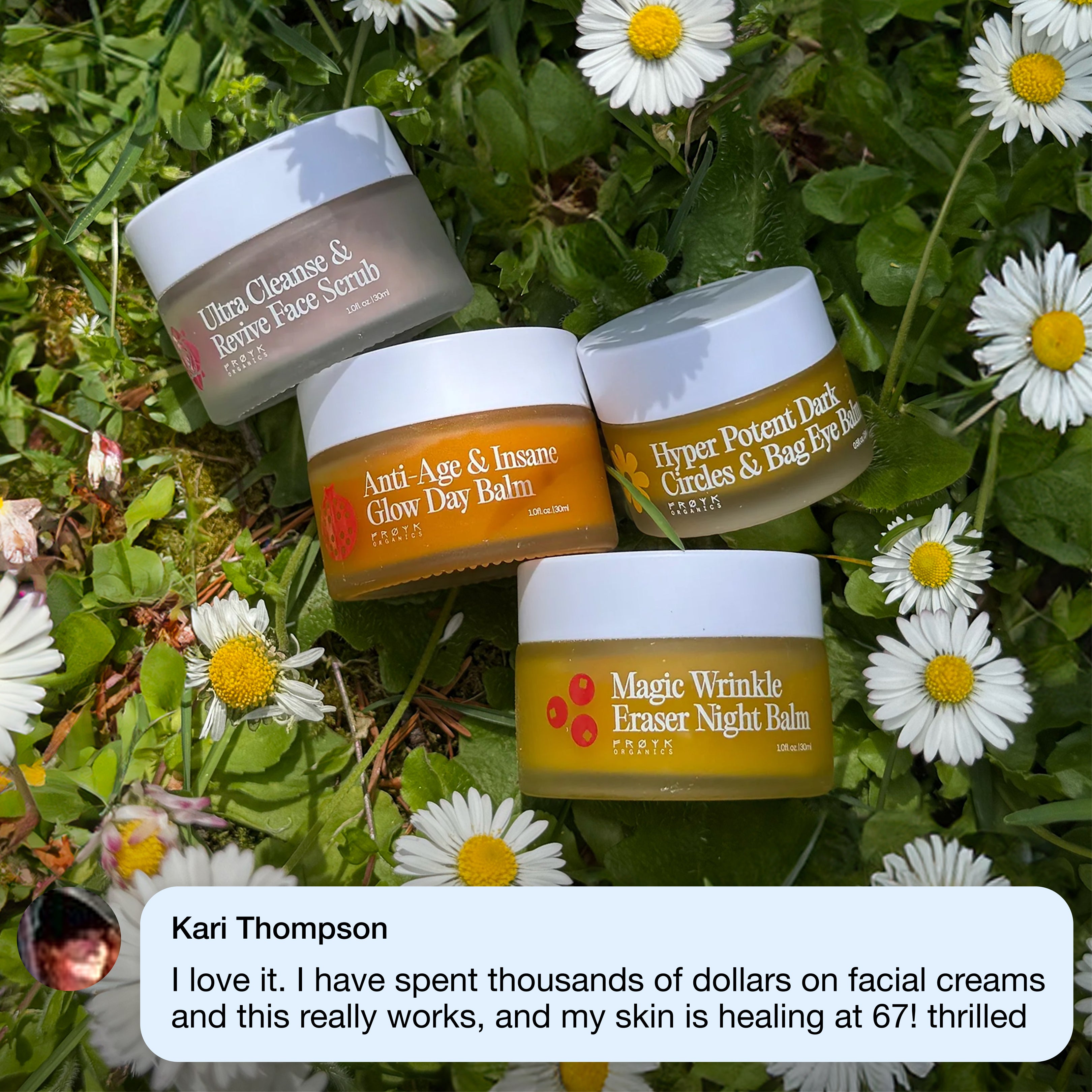
Wilde arctische planten en biologische bijenwas. Geen water, geen synthetische geur. Vier balsems in één routine die de barrièrelipiden voedt waar een blijvende glans van afhangt, ondersteund door een 60-dagen-niet-goed-geld-terug-garantie.
Shop het Systeem - $11Veelgestelde Vragen
Is theeboomolie goed om op pukkels te gebruiken?+
Kan ik theeboomolie op een opengebarsten pukkel doen?+
Hoe lang duurt het voordat theeboomolie op acne werkt?+
Helpt theeboomolie tegen acnelittekens?+
Welke olie is goed tegen acne?+