 Cuenta


Mejillas rojas. Ese ardor caliente y tenso después de un producto que prometía ser suave. Si alguna vez has lavado algo con pánico y te has preguntado qué desencadenó tu piel esta vez, este es para ti.
Tú no eres el problema, y tampoco estás atrapada en esto. La solución suele ser más simple de lo que parece en los estantes: menos ingredientes, sin fragancia sintética, y algunos aceites de plantas que realmente calman la piel reactiva en lugar de irritarla.
Esa es la idea completa detrás de los bálsamos de Frøya Organics. Son sin agua, hechos con plantas árticas silvestres y cera de abeja, con ingredientes simples que puedes leer en una sola respiración.
Esta guía te muestra qué necesita tu piel, qué evitar, y cómo elegir sin prueba y error.
Puntos Clave
- La piel sensible reacciona porque tu barrera cutánea es más delgada y deja entrar irritantes más fácilmente.
- "Natural" no siempre significa suave, ya que algunos extractos de plantas y aceites esenciales pueden desencadenar una reacción.
- Evita la fragancia sintética, SLS, ácidos fuertes y retinol si tu piel se irrita fácilmente.
- Una rutina corta con menos irritantes es mejor que una larga llena de activos.
- Los bálsamos botanicales sin agua calman y sellan la barrera, que es lo que la piel reactiva realmente necesita.
¿Qué es Realmente la Piel Sensible y Por Qué Reacciona
La piel sensible significa que tu piel reacciona con escozor, ardor, picazón o enrojecimiento ante cosas que no deberían causar una reacción en absoluto. Es principalmente una experiencia autorreportada, ya que a menudo no tiene signos visibles que un médico pueda señalar.
También es increíblemente común. La mayoría de las personas con piel reactiva comparten un rasgo: una barrera cutánea que deja salir la humedad e entra irritantes más fácilmente de lo que debería.
Esa conexión de barrera importa. Una revisión dermatológica sobre piel sensible la vincula con cambios en el sistema nervioso de la piel, y la debilidad de la barrera a menudo viene con ello. Cuando tu barrera es delgada, la piel delicada siente cada producto más intensamente, sin importar tu tipo de piel o tono de piel.
Así que el objetivo no es un producto más fuerte. Es dejar de alimentar tu piel con las cosas que la afectan.
¿Por Qué "Natural" No Siempre Significa Suave
Natural y orgánico no son lo mismo que libre de irritación. Un aceite de plantas puede calmar tu piel, y otro extracto de plantas podría no tolerarlo. Ambas cosas son ciertas.
Esto confunde a mucha gente que compra productos naturales de cuidado de la piel. Ves "botánico" en la etiqueta y asumes seguridad, pero tu piel no lee el marketing.
El aroma añadido es el ejemplo más claro. Algunos aceites esenciales son calmantes, pero otros pueden molestar a la piel muy reactiva, por eso conocer tus propios desencadenantes importa más que la palabra "natural" en la portada.
Esto no es una razón para temer la naturaleza. Es una razón para leer etiquetas y hacer una prueba de parche antes de confiar en un producto, especialmente si lidias con piel seca, con picazón y reactiva.
Ingredientes Fuertes a Evitar en Productos para Piel Sensible
Si tu piel reacciona fácilmente, algunos ingredientes comunes vale la pena evitar. Estos aparecen incluso en productos comercializados como limpios, así que la etiqueta sola no te protegerá.
Aquí está lo que tiende a causar problemas para la piel reactiva:
- Fragancia sintética, uno de los desencadenantes más comunes de enrojecimiento y picazón
- Lauril sulfato de sodio (SLS), un limpiador fuerte que daña la barrera
- Ácidos fuertes como glicólico y salicílico, que pueden arder y sobre-exfoliar piel delgada
- Retinol y retinoides, efectivos para algunos pero a menudo demasiado fuertes, y pueden causar descamación, ardor y poros obstruidos en piel sensible
- Fórmulas con mucho alcohol, de secado rápido pero deshidratantes
Los activos como ácidos y retinol tienen sus usos. El problema es que en piel delicada, a menudo traen más irritación que beneficio, por eso una ruta más suave generalmente gana.
¿Por qué sin fragancia es mejor que "sin olor"?
Aquí hay un truco de etiqueta rápido. "Sin fragancia" es una señal mejor que "sin olor", porque los productos sin olor aún pueden contener fragancia enmascarante para ocultar un olor base. Para cuidado de la piel sensible, menos aromas añadidos significa menos posibilidades de reaccionar.
Qué Buscar en Cuidado de la Piel Orgánico para Piel Sensible
El mejor cuidado de la piel orgánico para piel reactiva mantiene las cosas cortas, simples y amigas de la barrera. Quieres menos irritantes, sin fragancia sintética, y fórmulas construidas para apoyar tu piel en lugar de presionarla.
Usa esto como tu lista de verificación:
- Una lista de ingredientes corta que puedas pronunciar
- Sin fragancia sintética, sin parabenos, sin SLS o conservantes fuertes
- Ingredientes naturales como aceites de plantas y cera de abeja que hidratan y sellan
- Fórmulas sin agua, para que nada esté diluido con rellenos
- Probado por terceros, con opción de prueba de parche
Botanicales calmantes y aceites que apoyan la barrera
Ciertos aceites de plantas trabajan con tu piel en lugar de en su contra. El aceite de jojoba destaca porque refleja muy de cerca el aceite de tu propia piel, así que se absorbe bien y se siente calmante en lugar de grasoso.
Puedes leer más sobre aceite de jojoba para la piel y cómo apoya la suavidad. Los dermatólogos a menudo sugieren aceites ligeros altos en ácido linoléico, más extras calmantes como escualano y vitamina E para la hidratación.
La manzanilla calma el enrojecimiento visible, mientras que la cera de abeja y el cardo aseguran la humedad en una barrera cutánea dañada. Estos son los ingredientes orgánicos que calman primero, luego protegen.
Qué te dice Realmente la Certificación Orgánica
La certificación orgánica confirma cómo se cultivan los ingredientes, no qué tan suave se siente un producto. De hecho, orgánico no es automáticamente más seguro, ya que incluso las plantas orgánicas pueden contener compuestos que irritan. Etiquetas como USDA Organic o COSMOS solo significan un porcentaje establecido de contenido orgánico certificado, a menudo 95% o superior para los niveles más estrictos.
Otros, como MADE SAFE, descartan ingredientes considerados dañinos, y grupos como la National Eczema Association marcan productos amigables para piel propensa al eccema. Estas son señales útiles, pero no toda la historia.
Para piel sensible, una lista de ingredientes corta y sin fragancia aún te dice más que un sello solo. Los botanicales cosechados silvestres también reducen el riesgo de pesticidas y residuos químicos, lo que importa si los factores ambientales tienden a desencadenar tu sensibilidad.
Una Rutina Simple para Piel Sensible
Una rutina corta casi siempre vence a una complicada para piel reactiva. Amontonar sérums, lociones y activos le da a tu piel más oportunidades de reaccionar, no menos.
Mantenlo en tres pasos calmantes:
- Limpieza suave. Usa agua tibia, nunca caliente, y un limpiador suave con ingredientes delicados.
- Calma y protege. Usa un bálsamo nutritivo para calmar y sellar la barrera.
- Ve despacio. Añade un producto nuevo a la vez, algunas semanas aparte, y salta el frotamiento diario.
Ese último punto importa más. La piel envejecida y reactiva generalmente mejora con una rutina constante que evita sobre-exfoliar, así que resiste la urgencia de frotar tu piel limpia.
En cuidado del sol, la mayoría de los dermatólogos sugieren un protector solar mineral para tiempo más largo en el sol, en lugar de tratar un bálsamo como protección solar.
Cómo los Bálsamos Orgánicos Calman la Piel Sensible

Los bálsamos de Frøya están construidos para exactamente este problema: piel reactiva que quiere resultados sin el ardor. En lugar de agua y rellenos, cada bálsamo está lleno de plantas árticas y cera de abeja, así que una pequeña cantidad hace trabajo real.
Toma el Bálsamo para Piel Seca y con Picazón – Rostro y Cuerpo, hecho para piel seca, con picazón y propensa al enrojecimiento. Su fórmula se inclina hacia la manzanilla alemana para calmar la reactividad, más aceite de jojoba y cera de abeja para suavizar y sellar la barrera.
Es sin agua, libre de fragancia sintética, y lo suficientemente suave para cara y cuerpo. Ese es el punto de estos productos naturales: menos ingredientes, cada uno con un trabajo, y ningún maquillaje necesario para ocultar un brote.
Prueba de parche primero: Con cualquier cosa nueva, frota una pequeña cantidad en tu antebrazo interno y dale 24 horas antes de que llegue cerca de tu cara. Si tu piel se mantiene calmada, estás lista. Esta simple prueba de parche te ayuda a detectar una reacción temprano, especialmente con plantas árticas potentes.
Botica Completa para Rostro y Cuerpo

El Bálsamo para Piel Seca y con Picazón pertenece a un conjunto llamado Botica Completa para Rostro y Cuerpo, construido para calmar piel reactiva. Cada bálsamo es independiente, así que nada necesita mezclar o medir.
Aquí está cómo encajan las tres piezas:
|
Producto |
Lo que ayuda |
Plantas estelares |
Rol en tu rutina |
|
Piel seca, con picazón y propensa al enrojecimiento |
Manzanilla, cardo, cera de abeja, jojoba |
Mañana y noche calma y sella, cara y cuerpo |
|
|
Enrojecimiento y brotes reactivos |
Caléndula, marigold, cera de abeja |
Capa fina por la noche en áreas rojas y sonrojadas |
|
|
Articulaciones y músculos adoloridos |
Hierbas árticas, cera de abeja |
Masajeado en el cuerpo según sea necesario |
Porque cada bálsamo ya está mezclado, obtienes una rutina completa sin aplicar cinco activos que se pelean entre sí.
Cuidado de la Piel Orgánico para Piel Sensible, de la Manera Simple

Si tu piel ha estado atrapada en un ciclo de reacción y recuperación, la salida generalmente es más simple de lo que el estante hace parecer. Menos productos, sin fragancia sintética, y bálsamos botanicales sin agua que apoyan tu barrera tienden a hacer más que otra rutina de 10 pasos.
Esa es la idea completa detrás de Frøya Organics. Es cuidado de la piel orgánico para piel sensible construido sobre algunos ingredientes naturales que puedes leer, nada que mezclar, y bálsamos botanicales árticos hechos para calmar en lugar de reaccionar.
No tienes que tomar nuestra palabra. Puedes ver resultados reales de antes y después de mujeres con piel reactiva y propensa al enrojecimiento que cambiaron a una rutina botánica más simple.
Comienza con un bálsamo, haz una prueba de parche, y deja que tu piel te diga el resto.
Este artículo es solo para información general y no es consejo médico. Los bálsamos de Frøya Organics son productos cosméticos diseñados para calmar y apoyar la piel, no para tratar, curar o prevenir ninguna condición. Si tienes una reacción de piel persistente o grave, por favor habla con un dermatólogo autorizado.
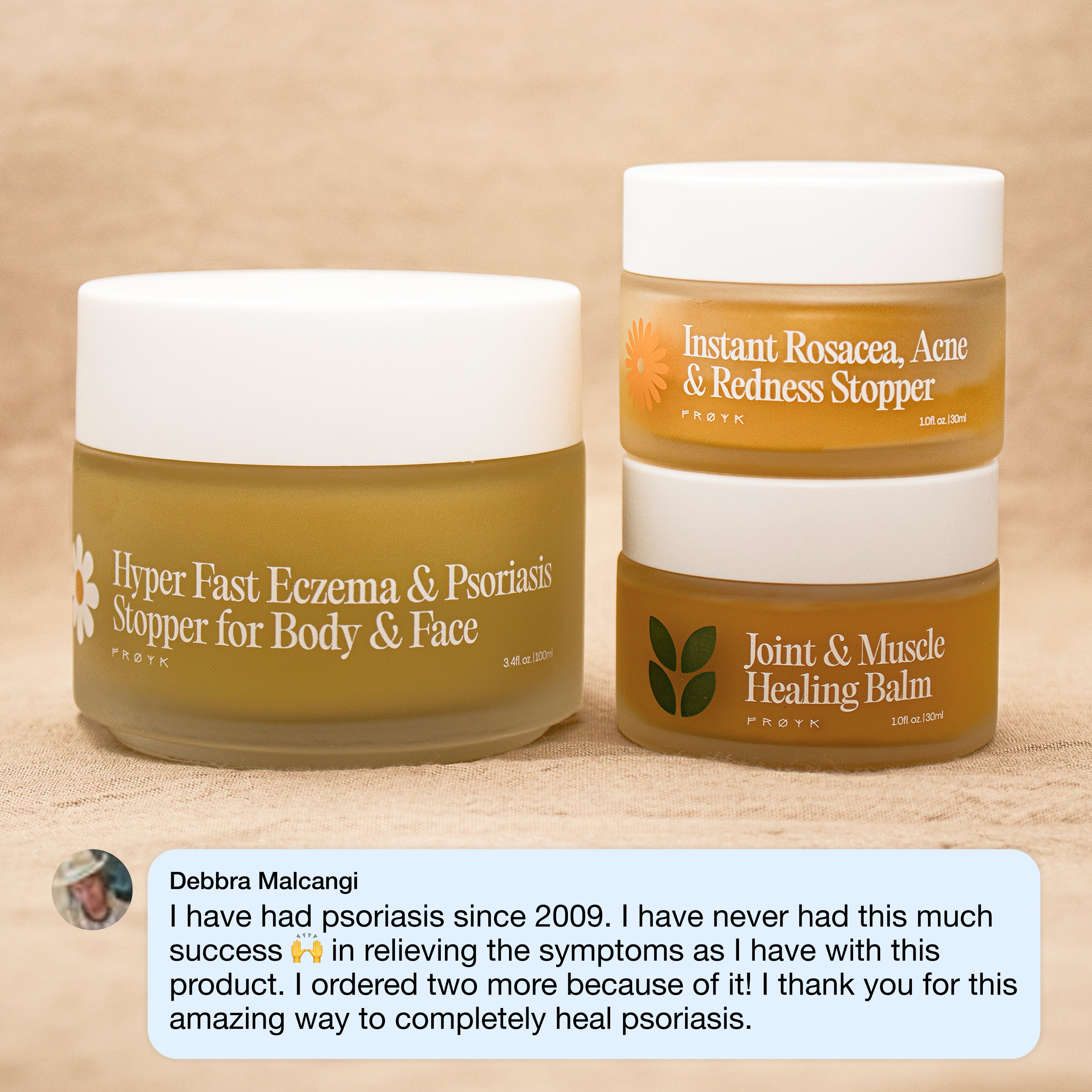
Tres bálsamos sin agua para piel sensible y reactiva. Plantas árticas silvestres y cera de abeja orgánica calman, sellan y suavizan sin fragancia sintética, respaldado por garantía de devolución de dinero de 60 días.
Compra el Sistema HoyPreguntas Frecuentes
¿Cómo elegir un limpiador suave rápidamente?+
¿Qué aceite facial es mejor para piel reactiva?+
¿Es el aloe vera seguro para todos los tipos sensibles?+
¿Cuáles son los mejores productos de cuidado facial para piel hipersensible?+
¿Cuál es la mejor marca de cuidado para piel sensible?+